This Is My Story
A short version of my musical biography, romantically contorted through the rearview mirror of human memory
The 1980s
I spent my childhood and adolescence in a small beach town in Northern Germany.
It was a beautiful place to grow up – bustling with excitement in the summer, sleepy and cozy in the winter.
Reading became my first passion; an early favorite was Tolkien. On weekend mornings, I’d sit on the living room floor by myself, watching early 1980s sci-fi movies like War Games or Blade Runner.
Music was playing around our house all the time – not Top 40 radio, but older records from the 1960s and 1970s: The Beatles and the Stones, Brian Wilson and Bob Marley, Roxy Music and Pink Floyd. My parents owned a sizeable vinyl collection. Aside from their shared favorites, my father was into progressive rock, while my mother preferred blues and folk.
I was initiated to pop music by one of my cousins, who’s a couple years older than me and used to record new songs off the radio. Sometimes she’d babysit me and bring her hand-labeled mixtapes, which she named Disco and gave each a sequential number, like Disco #81. I’d borrow and copy these tapes, and they became a formative influence on my taste.
Her favorite sounds were some of the edgier stuff of the mid-1980s: synth pop, italo disco, early house and hip-hop. She was a huge Depeche Mode fan, and they quickly became one of my favorite bands as well.
I loved all the colourful, sugary pop music she recorded off the radio: Kajagoogoo and Soft Cell, Shannon and Miami Sound Machine, Sabrina and Den Harrow. Their artificial, computerized sounds stood in stark contrast to the analog, guitar-driven rock my parents would play at home. Both would remain equally influential for me.
I started buying records with my pocket money. I remember 7-inch singles by Stevie Wonder (“Part-Time Lover”) and Colonel Abrams (“Trapped”) among my earliest purchases – both records were released in August 1985.
I was also really into the Hi-NRG style of pop written by the UK producer trio Stock-Aitken-Waterman: Some of my earliest favorites were Dead Or Alive’s “You Spin Me Around”, Bananarama’s “Venus”, as well as early singles by Rick Astley and Kylie Minogue.
What was drawing me in weren’t so much the vocals – even at that early time, I was favoring aesthetic and production values over image and narrative. That’s why I was also really into instrumental music quite early on. Two soundtrack themes from that time particularly underline my early love for synthesizer music.
The first one was Harold Faltermeyer’s synth- and drum-machine heavy title theme for the Beverly Hills Cop movie trilogy, “Axel F” (1984), which entered the top ten charts of many countries in Europe in 1985 and peaked at #2 in West Germany. A similar effect had Jan Hammer’s “Crockett’s Theme” from the TV series Miami Vice, released commercially in late 1986, which became another instrumental hit record in Western Europe, peaking at #4 on the West German charts.
1980s movie soundtracks in general exerted a subtle influence on my music taste, as I was starting to watch a lot of American films – looking back, the synthetic Hollywood scores by composers such as Giorgio Moroder and Vangelis probably shaped my taste just as much as the TV themes by Mike Post (Magnum P.I., L.A. Law, NYPD Blue, Law & Order etc.).
I got into British remix culture, by which I’m referring to sample-heavy collage records by Coldcut (specifically their “7 Minutes of Madness Remix” of Eric B. & Rakim’s 1986 hip-hop classic, “Paid In Full”), M/A/R/R/S (“Pump Up The Volume”, 1987) and Bomb The Bass (“Beat Dis”, 1987). These records were popular at the time, and I learned about them through a chart show on German public television, our equivalent to Top Of The Pops. This was even before MTV started airing in Europe.
One of my cousin’s tapes contained Grandmaster Flash & Melle Mel’s “The Message”. I fell in love with that song, but the recording cut off in the middle of the second verse. I became a fan of the rap music of Run-D.M.C., LL Cool J, the Fat Boys and the Beastie Boys because it sounded new and fresh – and different from the rock and folk music I knew from home. I started skateboarding around the same time – this must have been in 1987, when Powell-Peralta’s The Search for Animal Chin came out.
The 1990s
In my teens, I developed an encyclopaedic approach to following popular music. I’d basically spend most of my free time listening to records, dubbing records from friends, making mixtapes, reading all available magazines I could get my hands on, constantly watching music television. This was pre-internet, so those were the sources available to me, and I studied them thoroughly.
By the time I went to high school, I’d be devouring Kafka and Dostoevsky novels, and David Lynch’s Twin Peaks would run on national television. When I turned 14, Nirvana’s Nevermind was released, and nothing would ever be the same again.
During puberty, I pivoted from pop and rap to harsh, dark, mostly guitar-based music – grunge, goth rock and industrial. I still have one photo from that time where I have thick, shoulder-long black hair. I’m wearing a Ministry shirt and a silver bat on a leather cord around my neck. I still liked rap though – groups like Cypress Hill, Public Enemy and Wu-Tang Clan were part of my listening diet as well.
I half-heartedly tried to learn the guitar, then switched to electric bass. I never got good at it, because I rarely practiced. In my teens I joined a nameless cover band that would just rehearse a couple of times. Our repertoire was limited to a few songs by our shared favorites – The Cure, Joy Division and Bauhaus. We wore a lot of black, combed back our hair, and if we were feeling adventurous, put on some eyeliner.
The bass guitar soon collected dust in a corner of my room. In the mid-1990s, I got back into skateboarding and more intensely into hip-hop, mostly the bohemian ‘indie rap’ strain, but I also discovered electronic music from the UK – trip-hop, drum’n’bass and so-called IDM. There was no place to experience any of that in a club setting, so I’d listen to records all night while playing video games with my friends.
In the port town of Kiel, Germany, nightlife was limited to a bunch of commercial discotheques. The only alternative spots were an indie rock bar, and a community center which would have a free jazz band playing on one floor, while a goth party would go down on the other one. Needless to say, I spent much time at both places.
This was the second half of the 1990s, and my main role models were the Beastie Boys, who had pivoted from frat-boy party starters to purveyors of retro cool. I switched my own black Doc Marten’s boots for black Adidas Campus sneakers and wanted to be MCA so badly.
I moved out of my parents’ house and in with a friend who was a jazz pianist. He introduced me to the catalogues of labels like Blue Note, Impulse! and ECM. I’d started digging for older records too. These explorations happened because of my deepening love for hip-hop and electronic music, genres that were still sample-based in those days. My musical universe constantly expanded through my finds – from jazz and soul to funk and dub to afrobeat and bossa nova.
The 2000s
All my friends went off to uni in different cities, so we’d pool the money for gas, drive a few hundred miles on a Friday, go out the whole weekend, and sleep on the dirty floors of shared student flats in Berlin, Cologne, Amsterdam or Paris.
I moved to Hamburg around the turn of the millennium. I started spending too much time in the bars of my new neighborhood. I moved to Zurich for a few months one winter, depressed and without a clear goal in life. While acquiring two useless law degrees, I began writing for music magazines, and during an internship I met a girl whom I’d marry and divorce later.
When I’d finished my studies, I got a job in a media and entertainment law firm. It wasn’t for me. After a year, I dropped out of the aspiring lawyer career path to become the editor-in-chief of Juice, the biggest local hip-hop magazine, which I’d been contributing to for a while. I would do this job for almost six years – one of the formative experiences of my professional life.
I caught the tail end of an era where record companies would still routinely pay for music journalists’ transatlantic flights out of promotional budgets. I reported almost exclusively on hip-hop for some years, working for various other German magazines and newspapers aside from the magazine I edited.
From the outside, my life might have looked successful. I slept in five-star hotels from West Hollywood to Miami Beach. I also drank and smoked too much. I didn’t eat healthy and didn’t sleep well. I was late diagnosed with being on the spectrum, so looking back, I probably did a lot of masking in those days.
Musically, I was really into underground hip-hop at the time. I’d follow everything that my favorite producers Madlib, J Dilla and MF DOOM did, as well as basically everything in the independent rap scene. I was really interested in the growing instrumental hip-hop world, especially the L.A. beat scene around Flying Lotus, and progressive UK producers such as Hudson Mohawke.
As a long-time fan and follower of UK electronic music, I’d fall deeply in love with that strain of hauntology represented by Burial and Boards of Canada around the same time. I was really into dubstep for a bunch of years (not the brostep type, we’re talking the mid-2000s DMZ era here), and then naturally moved along with the movement dubbed ‘post-dubstep’ and producers venturing off into more experimental areas.
The 2010s
Fast forward a few years. I’d left my first job because of burnout, my first marriage was disintegrating and I suffered from severe mental and physical health issues.
In this crisis period, I turned towards meditation. I started reading books by teachers like Jon Kabat-Zinn, Thich Nhat Hanh, Pema Chödrön and Alan Watts, and attending spiritual retreats. A mindfulness course led to my first seven-day Vipassana retreat, which led me to exploring the practices of Zen Buddhism and Deep Listening. I started reading a lot about Taoism and Stoicism.
I also really got into minimalism. I read all the books and blogs, and I got rid of most of my belongings. At one point I owned less than 100 things, listed in a neat spreadsheet. It was all about leaving baggage behind, I guess.
I stopped drinking and smoking. I took up hiking, running and meditating. I got into therapy. And then I fell in love again and got married for a second time.
Musically, I got into ambient, vaporwave and other experimental music in the early 2010s. A whole new musical world opened to me – one where harmony, melody and rhythm weren’t as important as mood, texture and soundscapes. I’d start diving into the history of the genre, dig deep into the catalogues of classic ambient musicians, and study formative books by people like Brian Eno and David Toop. Hauntology remained a fascinating concept for me.
Professionally, after leaving my position at the magazine behind, I’d go back to writing freelance, but I’d also start exploring different roles within the music industry, consulting brands and labels, managing artists, running an independent record label and producing my own weekly radio show for the award-winning German station ByteFM.
In the mid-2010s, I got involved in streaming playlist curation, which I’d do full-time for several years at Spotify, and ended up leading a global team of editors and programmers at the company. Suddenly I was leading the lifestyle of a manager at a tech company. I was based in Berlin but often visiting and working from offices in Amsterdam, London, Stockholm and New York City.
Again, this might have looked fancy and successful from the outside, but the longer I played the game, the more I felt a misalignment between my personal development and the company goals. The pandemic did its fair share for me to realize I didn't want to keep going down this route.
The 2020s, so far
During the pandemic, I wrote and published a non-fiction book about my spiritual journey so far, Zen Style, which was published by Arkana, a division of Penguin Random House. I’m actually quite proud of that work. So far, it’s only available in German.
I wanted to get out of the tech and music industry, and I wanted to leave the city behind, at least partly, to live a more reclusive lifestyle, more in tune with nature and the seasons.
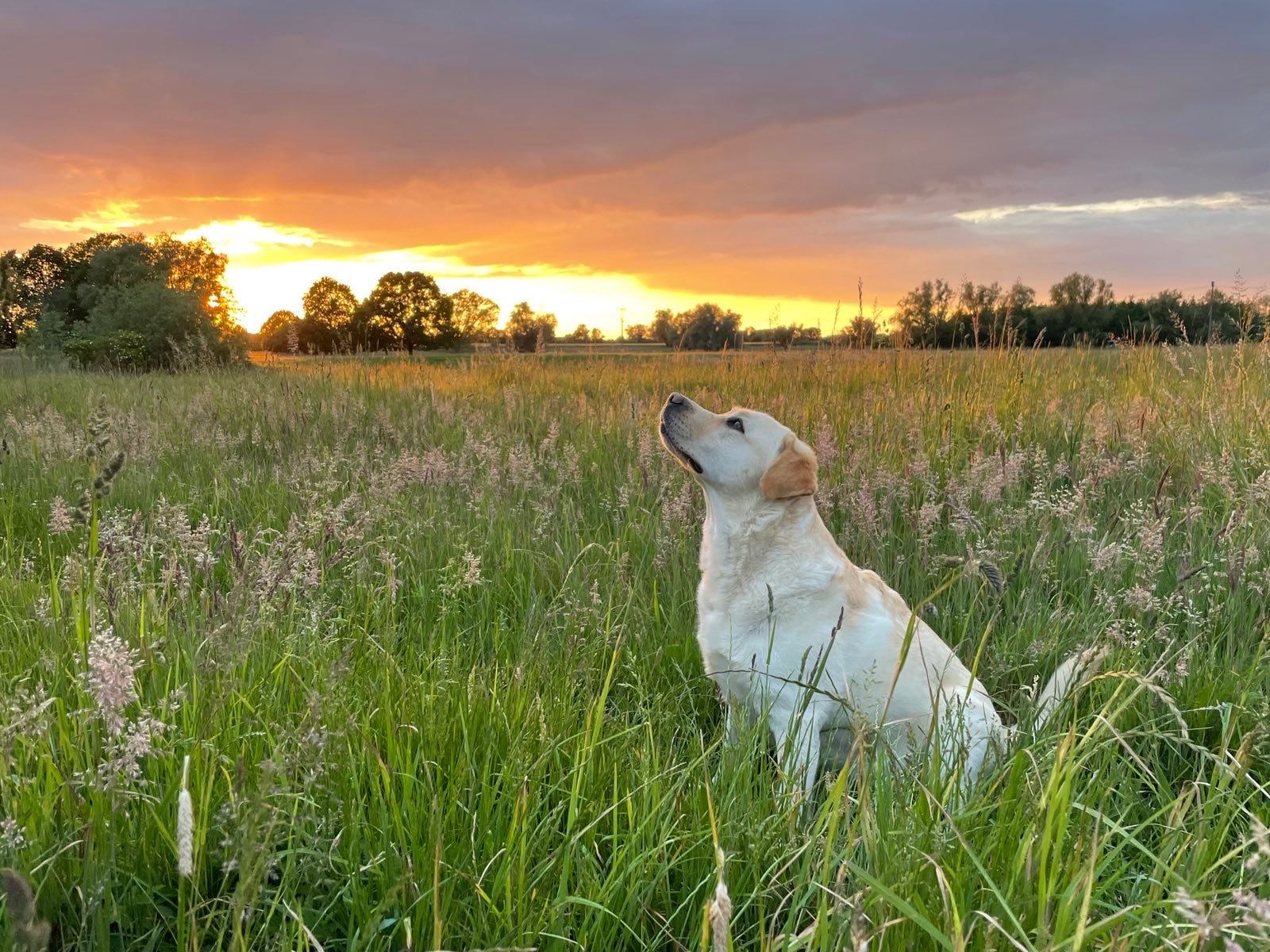
My wife and I bought the ruins of an old farmhouse on a piece of land in the rural Northeast of Germany, where we’ve been spending much time ever since, working remotely and fixing up the space. Our family grew through the addition of a young yellow Lab named Quinn.
Records, books and films are still my main way of engaging with the outside world. I’m also regularly spending time in the city just to meet friends and business associates, and go to concerts and exhibitions.
Since I left my last full-time job, I’ve returned to working as a freelance writer and consultant. I’ve been working for record labels, writing for newspapers and magazines, teaching culture journalism at universities, and publishing this newsletter, which unexpectedly has turned into one of my most important projects.
The roots of zensounds lead back to the day in October 2018 when I decided to delete all my social media accounts. To keep in touch with friends and followers, I launched an old school mailing list. I used it to send out irregular music recommendations and life updates – hence the title, Zen Sounds.
It became zensounds (lowercase, like much of the music I present here) after I moved to Substack, switched to English and adapted a weekly schedule, which happened in December 2022.
The music I’m focusing on is ambient/experimental – and many other things, from indie rap to spiritual jazz to minimalist composition to post-rock to vaporwave. If you’ve read this far, you’ll understand why the scope of my newsletter in terms of genres and musical eras needs to be rather wide.
Publishing my own newsletter seems like a viable way of getting my writing out to people who are still interested in connecting deeply with music and culture, unfazed by mainstream trends and the popularity contests of streaming numbers and social media vanity metrics.
People who listen to albums instead of playlists, who read books instead of bingeing podcasts at double speed, who prefer slow arthouse films to short video reels.
People like you, I assume.
If you still want to know more about me and my taste in music, here are some more personal essays:
The Music That Made Me – My life from 5 to 45 in 9 records
100 Albums That Rocked My World – A highly subjective, genre-agnostic list of inspiring, trail-blazing records
Thanks for reading!


Happy start of a new year ✨🌿✨ I’m a music maker and sound designer from Helsinki. Also a fellow wall-starer (been sitting zazen for quite a while now). I really enjoy your writing here, and hope read more during this new year. Reading your thoughts on music have inspired to start formulating some thoughts of my own, perhaps even to publish some here. Take care ✨🌿✨
Hallo Stephan, vielen Dank für die persönlichen Einblicke. Das erhält man gleich eine neue Perspektive des gelesenen. Besonders deine Artikel über experimentelle Musik haben es mir angetan. Ich plane dieses Jahr 2 Besucher meiner Heimat Stadt Berlin und werde deine Tipps beherzigen. Keep up the good work 🤩
Matthias
P.s. bin auch ein Cure Fan, aber nur bis Faith. Werde nie verstehen was Dir an pornography gefällt 🤣🤪