
ZS History of Vaporwave (Part 2)
From Turntable.fm livestreams to the first wave of popularization (2011-2012)

“Global capitalism is nearly there. At the end of the world there will only be liquid advertisement and gaseous desire. Sublimated from our bodies, our untethered senses will endlessly ride escalators through pristine artificial environments, more and less than human, drugged-up and drugged down, catalysed, consuming and consumed by a relentlessly rich economy of sensory information, valued by the pixel. The Virtual Plaza welcomes you, and you will welcome it too.”
Aren’t the early days of every art movement its most exciting period? Those moments before a new scene emerges, before a new genre is coined and rules are made, that period when artists don’t even know what exactly it is they’re doing and formulas do not yet exist, when everything still seems possible…
For vaporwave, that period lasted from mid-2011 to late 2012.
In Part 1 of this history, we’ve established that in the second half of the 2000s, a primordial soup of internet sounds had formed, including a stream of ‘hauntological’ electronic music and ‘hypnagogic’ pop (more on these terms in Part 1 as well), and experimental microgenres such as chillwave and witch house.
Two musicians deeply associated with the birth of vaporwave are Daniel Lopatin and James Ferraro. While Lopatin’s ‘eccojams’ were based on slowed down loops from bubblegum pop and smooth jazz songs, heavily treated with effects, Ferraro wrote original music based on the tropes of virtual media and corporate stock music.
Lopatin stood in the tradition of John Oswald’s plunderphonics and DJ Screw’s chopped-and-screwed techniques. Ferraro came from the DIY drone, noise and lo-fi scene. Both appropriated the naive and promising futuristic sounds of the early age of personal computing in the 1980s and 1990s.
Vaporwave was the fusion of those two ideas by a bunch of creative internet kids who were also into Japanese pop culture and post-Marxist theory. They connected over online forums and early social media platforms, where they shared self-produced electronic music and collages of early computer graphics, anime and VHS video art. This intersection is where vaporwave was born.
“The vaporwave community was a kind of internet underground with a DIY ethos”, author and researcher Grafton Tanner notes in his 2016 book on the genre, Babbling Corpse. “Monikers obscured authorial intent. How many producers were there really? Or was one person behind them all? Perhaps no humans were involved. Perhaps vaporwave was just the sound of the internet singing back to us.”
Vaporwave’s early producers often hid behind anonymous monikers, making it the first placeless and – largely – faceless music scene. In Michael Brown’s brilliant 2025 book on the 2015 vaporwave classic BUY NOW by Eyeliner, the introverted New Zealand-based producer Luke Rowell (alias Eyeliner) is quoted: “I spent a bit of time in my youth being afraid of school, afraid of the world. Just being in my bedroom with a computer was incredibly comforting.”
Most producers of that first (vapor)wave were still teenagers. Their ambition was not to make a career in music, but to make cool stuff to share with their friends. Being shut out from the traditional entertainment industry due to a lack of access and the legal restrictions of copyright law, they embraced new methods of distribution.
Building their tracks on cracked software, they spread their albums as ZIP files through internet blogs, forum sites and early social media such as MySpace, Tumblr – and, most notably, Turntable.fm. This rather short-lived platform launched in May 2011, allowing users to create live chatrooms. Some of the scene’s most influential producers would meet there regularly to upload and play music for each other, with everyone commenting in real time.
The original circle on Turntable.fm reportedly included Ramona Langley (Vektroid, Laserdisc Visions), Robin Burnett (Internet Club), Leonce Nelson (Geotherm), Jonathan Dean (Transmuteo), Ryan Hroch (Veracom), Joshuah Miller (Infinity Frequencies), Melissa Newton (Luxury Elite) and others; not all of them made vaporwave, some were just into weird experimental electronic, lo-fi or drone music.
Part of that community were also Liz Yordy (DJ Alina) and Chaz Allen (Metallic Ghosts), two underage kids from North Carolina and Illinois respectively, who started curating livestreams under the name SPF420. Those gatherings, which they’d later move to the platform TinyChat, would become foundational to the scene. “We would all hang out and listen to whatever”, Liz said in a 2014 interview. “Lil B, Salem sped up 33%, sometimes our own tracks.”
The term ‘vaporwave’ first appeared in blogposts in the autumn of 2011, mostly used as a satiric half-joke, kind of a riff on all those new internet music genres and hashtags. In a Chicago Reader piece from early 2013, Veracom is quoted saying it’s “an ugly overused tag based on somebody’s ironic sense of humor that never should have been taken seriously.”
Its popularization in media is generally credited to the article “Vaporwave and the Pop-Art of the Virtual Plaza” by Adam Harper, published by Dummy magazine in July 2012. In that article, Harper explains in a mix of excitement and bewilderment:
“The typical vaporwave track is a wholly synthesised or heavily processed chunk of corporate mood music, bright and earnest or slow and sultry, often beautiful, either looped out of sync and beyond the point of functionality or standing alone, and sometimes with a smattering of miasma about it. It’s made by mysterious and often nameless entities that lurk the internet, often behind a pseudo-corporate name or web façade, and whose music is typically free to download through Mediafire, Last FM, Soundcloud or Bandcamp. Occasionally vaporwave produces a material object, a cassette or CD-R decorated with internet-age and hi-fi-era pop art that both sickens and astonishes. The text surrounding vaporwave – the artist names and track titles – is almost entirely in declamatory, brutally attention-craving capital letters, and often employs Chinese and Japanese lettering whose inscrutably (to me and most other Westerners, at least) enhances the music’s sense of tapping into the airwaves of global techno-capitalism and overhearing its business as usual, meant for someone else.”
The Dummy piece was heavily criticized from the scene for being reductive and/or pretentious. But its importance for the classification and popularization of the movement can’t be denied.
Ramona Andra Langley (Vektroid)
If Lopatin and Ferraro are the godfathers of vaporwave, then Ramona Langley is its first legitimate pioneer. Hailing from Washington State, she’d been releasing experimental electronic music under the name Vektordrum since 2008. A trans woman on the autism spectrum, she’s previously spoken about growing up with an absent father who worked in Silicon Valley and therefore spending the majority of her youth on the internet.
In 2010, Langley was 18 years old and by now living in Portland, Oregon. Inspired by Daniel Lopatin, she was making her own eccojams-style experiments, layering them with samples, synths and programmed drums. Her EP Telnet Erotika, released in October of that year, was an important piece of proto-vaporwave music. In March 2011, she released the mixtape Virtual Casino under her alias Laserdisc Visions; the Kansas-based independent label Beer On The Rug re-packaged and re-released it in July as New Dreams Ltd.
Langley herself has likened the sample-heavy project to “a caricature of mass media and its evolution in the late ‘80s right before computer culture blew up in America” (quoted in Adam Harper’s Dummy article, which is currently only accessible through the Wayback Machine). Even more than Telnet Erotika, this collection of uncanny easy listening vignettes would influence the rest of the early vaporwave scene.
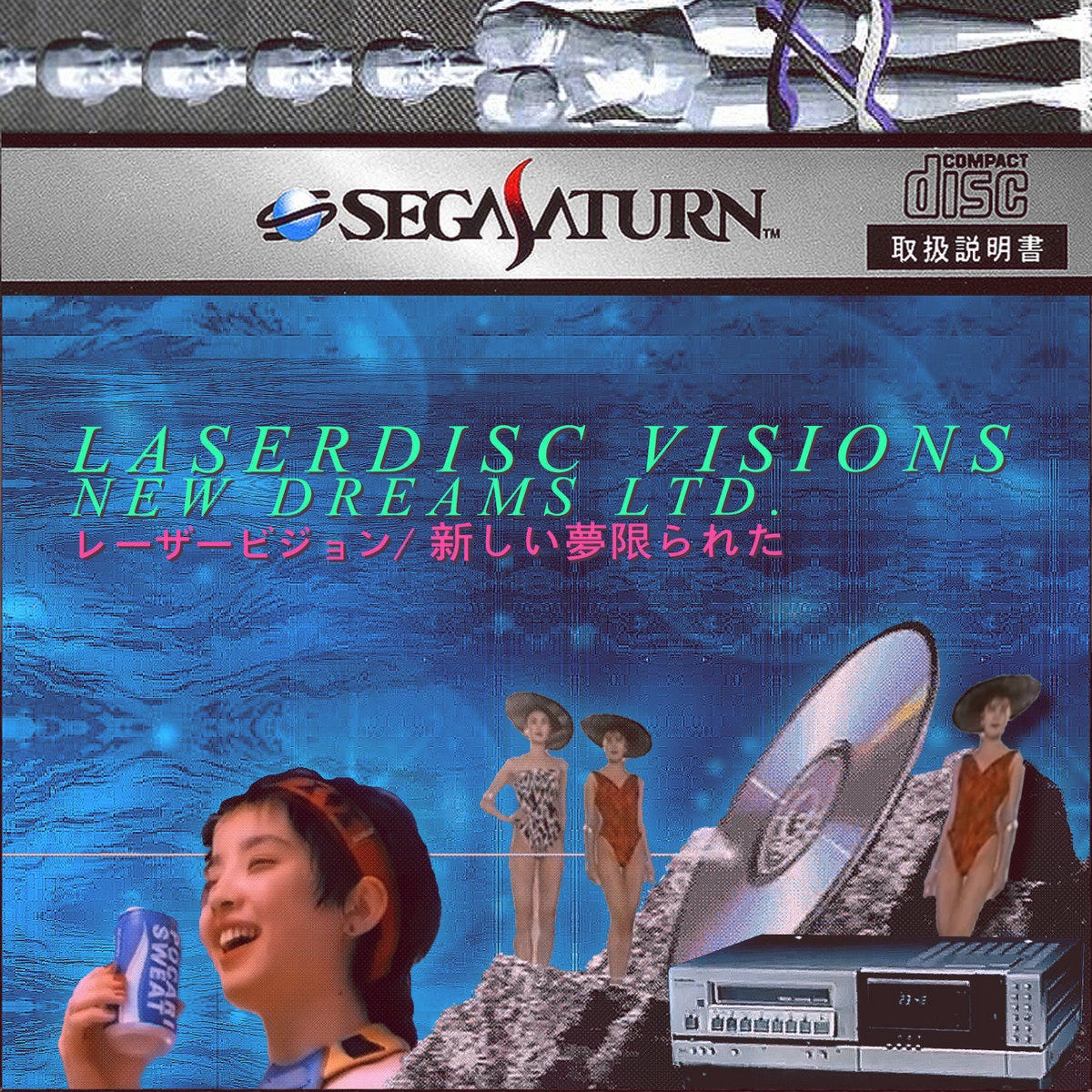
After associating herself with the original Turntable.fm crew in the summer of 2011, she’d release five more vaporwave-leaning projects in the second half of the year – credited to various monikers like fuji grid TV, New Dreams Ltd., esc 不在, Tanning Salon and Macintosh Plus. Some of them were deleted and re-released later with different mixes, tracklists and artworks.
It was the last one in that influential string of releases, the seminal Floral Shoppe, that would become the most prominent example of the genre when it became a semi-popular internet trend in 2012. It also contains the most streamed vaporwave track of all time, essentially a slowed down loop of the intro of a 1984 Diana Ross track.
“Floral Shoppe nailed the feeling of in-betweenness: between waking and sleeping, between male and female, between nostalgia and abject horror”, Grafton Tanner writes in Babbling Corpses. Langley was the first to assemble all elements of the burgeoning genre – musically as well as visually – and package them into an accessible work of art that may not have quite reached mainstream-level success, but at least familiarized vaporwave with many new listeners.
Interviewed by Adam Harper in 2012, Langley rejected the vaporwave category (“I don’t affiliate with it personally”), but agreed New Dreams Ltd. might fall under it. She referred to her online circle of friends as largely unconcerned about vaporwave being an actual genre: “Screw music has been around for ages now – we’ve just changed the context we see it within and the means by which we conceive it.”
During 2012, Langley would go on to release another handful of foundational vaporwave projects under aliases such as 情報デスクVIRTUAL, Sacred Tapestry and PrismCorp Virtual Enterprises. In 2013, she’d drop out of the scene. At this point, she’d shaped the young genre so profoundly that it basically became synonymous with her work for many listeners. In the infamous “Vaporwave Essentials” graphics that have been floating around online forums, she even got her own category, right between “proto-vapor” (Lopatin, Ferraro, Skeleton) and “classic style” (most of the producers below).
Though Langley never returned to this style of music, she has remixed and re-released many of her original albums from the 2011–2013 era. In recent years, she’s apparently moved back to Washington State, where she’s still active as an independent electronic music producer and graphic designer; her Bandcamp page has been saying for a while that she’s working on a new MacPlus album. Her last release under that alias dates back to 2019.
Robin Burnett (Internet Club)
In an extensive 2024 interview with music journalist Nick Caceres, Robin Burnett from Dallas, Texas, recalls that they were still in high school when the movement kicked off. They launched their Datavis project at age 15, recording on hardware in their bedroom: “It was just these lumbering drones and cheap keyboard drum machines looping around and making dusty, droning, rhythmic, weird shit.”
They’d move on to software soon, processing samples ripped from YouTube to endearing effect. Their first pre-vapor release, the EP Fading, came out in October 2010 (the same month as Langley’s Telnet Erotika). Around that time, Burnett befriended Leonce Nelson, a fellow teenager from New Orleans who lived in Atlanta, on social media. The duo shared musical interests and started exchanging files online, adding to each others’ experiments – a practice that eventually morphed into a collaborative project called DataVision Ltd.; their first release, the EP Vector Tables, came out on January 1, 2011.
The music on Vector Tables is a mix of glitchy, screwed up lo-fi loops of ad snippets and other weird sounds. “I think we were just really heavily inspired by that time period when chillwave was over, whatever that meant”, Burnett says. “It seemed like there was another wave with a new microgenre every five seconds. Before vaporwave became a term, you just got lots of bullshit that either I came up with or other people came up with.”
Asked about their main musical influences at the time, Burnett names the usual godfathers such as Ford & Lopatin, Ferraro’s New Age Tapes label and Vektroid’s Telnet Erotika, but also the late L.A. based producer Napolian, Sam Mehran’s Outer Limits Recordings and weird noise acts like the French duo Natural Snow Buildings, which they’d discover through internet blogs like Altered Zones.
Altered Zones was “a 2010-11 spinoff of web magazine Pitchfork that aggregated blog posts from other sites”, as Michael Brown states. “There was music distribution and criticism, review, the Net Art scene on Tumblr, early computer graphics, VHS rips, GIFs”, Luke Rowell alias Eyeliner recalls in Brown’s aforementioned book.
Burnett and Nelson would soon join Turntable.fm and become the center of the early vaporwave group. Burnett created a new solo alias for musical experiments to play on these livestreams: Internet Club. They dropped their first full-length project in June 2011 on their private Tumblr page, an album called Modern Business Collection, which started off with the programmatically titled tune “Lonely Internet Nights”.
While Nelson moved away from vaporwave rather quickly, Burnett released an album per month for the rest of the year, most of them under the Internet Club moniker: “I just had so many ideas. Every album was just me trying to dig in and screw around with a concept. Deluxe was my first look into Japanese TV commercials and that was definitely influenced by Vektroid and her look into that. Beyond the Zone was somewhere between like Heisei-era Japan during the ‘90s and ‘00s, crossed with that early optimized business.”
Being 15 or 16 at the time, Burnett was already exploring a wide range of references from Japanese anime to stock music, from Wong Kar-Wai films to Hong Kong hip-hop, sourcing their samples from the internet. In the interview, they’re calling that moment in late 2011 the peak of their “very concretely situationist and marxist plunderphonics phase”. Grafton Tanner applied French philosopher Guy Débord’s idea of détournement to early vaporwave like that of Langley and Burnett, as they gave that 1980s hypercapitalist aesthetic a completely new meaning.
Burnett kept going at this pace in 2012, releasing album after album and creating another alias, Ecco Unlimited, to explore sample-based longform drone music. Similar to Ramona Langley, Burnett came to an end of their vaporwave phase around early 2013, a period they’re referring to as “the depression era”.
After releasing some more music under other aliases like memorex dawn, monument XIII and SunCoast Web Series, their main artist identity became Wakesleep – a project influenced by contemporary composition and musique concrète, utilizing both samples and original music, moving away from the semi-ironic stance of vaporwave. Similar to Ramona Langley, Burnett would not return to making music in that style for a very long time. Only in the last few years they appeared at a bunch of festivals and sporadically released some new material as Internet Club.
Computer Dreams
One of Burnett’s main influences on their earliest Internet Club releases was an anonymous producer from Houston, Texas, going by the moniker Computer Dreams, who also made vaporwave before that term even existed. Their Midnight Television EP and the self-titled Computer Dreams album consist of hypnotizing lo-fi loops resembling 1980s TV background themes. These came out in May/June 2011 on Beer On The Rug, the same label that would release Ramona Langley’s first Laserdisc Visions album and Floral Shoppe later in the year.
Labels weren’t an important part of the vaporwave scene, though Beer On The Rug has to be credited as it gave the music some wider exposure in experimental electronic circles. Artist-run labels such as Fortune 500 or Business Casual would follow in its footsteps, signposting the relevant releases in a sea of proto-slop that vaporwave would soon produce.
Computer Dreams followed these early, formative projects up in August 2011 with a split record with synth wizard Napolian, then released Silk Road in September and the untitled EP in November, before vanishing from the scene. They’d eventually reappear in 2013 as Computer Slime, and revive the Computer Dreams moniker in 2018, but their new music now fell into the juke/footwork genre.
The Rest of the Crew
Two other, highly influential producers in those early days were Eric McGuigan (alias Lasership Stereo / Diskette Romances) and Joshuah Miller (alias Infinity Frequencies / Local News).
McGuigan’s first EPs as Lasership Stereo appeared in September/October 2011 – which makes him one of the earliest proponents of the genre right after Langley, Burnett and Computer Dreams. One of his most influential releases, the Diskette Romances EP, came out in June 2012.
Miller debuted as Infinity Frequencies with his Euphoria project in July 2012. While that one still features classic 1980s eccojams, he’d soon develop a new style that he’d perfect on his lauded Computer Trilogy in 2013 – short instrumental, usually drumless vignettes that evoked the uncanniness of so-called ‘liminal spaces’ such as empty malls, museums or hotel room floors. As Local News, he’d become the first producer to make what would later be dubbed signalwave or broken transmission, a subset of vaporwave created from old radio jingles and TV broadcast samples.
Other producers I want to at least mention because they created vaporwave in this earliest period of the genre, without having much output, are MediaFired and Coolmemoryz. Veracom and Transmuteo, who belonged to the early Turntable.fm crew as well, were more into drone and ambient music. Acts such as Golf Swingers, Boy Snacks and SURFING are sometimes associated with the genre because of certain aesthetic overlaps, but looking back I’d not really consider them core vaporwave – they might share some influences and have released on the same labels, but that’s about it.
In the second half of 2012, a bunch of new players and producers arrived on the scene though, bringing with them their own influences and creating what would evolve into several subgenres of vaporwave.
Inspired by the music of Computer Dreams and James Ferraro, Luke Rowell alias Eyeliner from New Zealand released his first vaporwave album High Fashion Mood Music in July 2012. A skilled electronic musician who’d been releasing synth pop music as Disasteradio for a decade, the Eyeliner project didn’t rely too much on sampling but created its very own 1980s-themed throwback style.
Patrick Driscoll alias Blank Banshee released his first album Blank Banshee 0 in September 2012. It’s seen as the founding document of vaportrap, a fusion of vaporwave textures and instrumental trap beats.
Alexander Matulonis alias Hentasi came out with Vacant Places in the same month, a seminal release of mallsoft, a vaporwave subgenre revolving around Muzak samples, mixed as if played over speakers at an abandoned shopping mall.
Melissa Newton alias Luxury Elite, a producer who’d been among the earliest Turntable.fm crowd too, started releasing her first projects at the end of the year, outlining her vision of the ‘late nite lo-fi’ subgenre. Her first fully realized album, III, would appear in December, but her best work was yet to come.
Ryan DeRobertis alias Saint Pepsi would close off the year with his first release Laser Tag Zero, laying the foundation of what would become future funk, but similarly to Luxury Elite, his time to shine would come next year.
The “Death” of Vaporwave
In January 2013, SPF420 hosted an online festival which Chaz Allen called a “final eulogy” for vaporwave. In a Chicago Reader article, he’s quoted: “As soon as you name something, it’s going to take off and die.”
It’s interesting to read that now, because vaporwave hadn’t even reached mainstream-level success at the time. Pop videos by Rihanna and Azealia Banks seemed superficially inspired by the Tumblr visuals of vaporwave and the ‘seapunk’ aesthetic, but only a small audience was aware of the music. It did find some appeal on platforms like Reddit and 4chan. Some music magazines, like Dummy and Tiny Mix Tapes, had written stories about it (while others, like Pitchfork, continued to ignore it), and critic Anthony Fantano had reviewed Macintosh Plus’ Floral Shoppe, almost one year after its release, on his popular YouTube channel The Needle Drop.
Even this little bit of outside attention seemed unwanted though. Allen again: “That Fantano review helped kill vaporwave, helped make it like everyone was doing it now. And 4chan was probably what really killed it, and the Dummy article.”
Considering the history of the scene as an essentially anti-capitalist artform (which is not, as often proclaimed, an overblown interpretation – it’s what pioneers like Langley and Burnett even said themselves about their initial motivations), it’s understandable that artists were afraid of co-optation by the music industry. Some also didn’t want to get boxed in by a loosely defined aesthetic that felt fun for a minute but constraining in the long run, when they experimented in multiple areas of electronic music.
And still, despite all the gatekeeping and infighting which seemed to be inevitable in a scene consisting mostly of teenagers, vaporwave wasn’t dead at all. It had actually just started. Ramona Langley and Robin Burnett would eventually stop making vaporwave, but new producers appeared in their place, inspired by and adding to their legacy, pushing the music into interesting new directions.
Throughout the next years, that tiny U.S.-focused underground scene would morph into a global community that went through multiple hype circles. We will dive deeper into this matter in the next issue of this series, when I’ll look in detail at the era of peak vaporwave – the time from 2013 to 2015.
Essential Listening: 15 Classic Vaporwave Tapes (2011–2012)
Midnight Television – Midnight Television (EP, 05/2011)
Computer Dreams – Computer Dreams (album, 06/2011)
Internet Club – Modern Business Collection (album, 06/2011)
Laserdisc Visions – New Dreams Ltd. (album, 07/2011)
18 Carat Affair – Vintage Romance (album, 07/2011)
MediaFired – The Pathway Through Whatever (EP, 07/2011)
Internet Club – Beyond The Zone (album, 09/2011)
Macintosh Plus – Floral Shoppe (album, 11/2011)
Diskette Romances – Diskette Romances (EP, 06/2012)
Eyeliner – High Fashion Mood Music (album, 07/2012)
Infinity Frequencies – Euphoria (album, 07/2012)
Sacred Tapestry – Shader (album, 08/2012)
Blank Banshee – Blank Banshee 0 (album, 09/2012)
Hantasi – Vacant Places (album, 09/2012)
Luxury Elite – III (album, 12/2012)
I love the detail and care here! The love of Vaporwave is vaping me