
Vapor Talks #38: Eyeliner
The Kiwi vaporwave legend, MIDI enthusiast and digital fantasist in conversation
When Luke Rowell discovered vaporwave in New Zealand some 15 years ago, he’d been making experimental electronic music for almost a decade under the name Disasteradio.
Inspired by the nascent net art scene, Luke felt inclined to create his own idiosyncratic vision of original, synth-based vaporwave, which he’d spread out over three influential mixtapes under a new alias, Eyeliner, between 2012 and 2015: High Fashion Mood Music, LARP of Luxury and BUY NOW.
In 2025, author Michael Brown published a full book about Eyeliner’s masterpiece BUY NOW as an entry in Bloomsbury’s popular 33 1/3 series. This outstanding contribution to cultural analysis offers the most compelling summary to date of the early history of vaporwave. It succeeds in vividly contextualizing both Luke’s artistic journey and the development of a global online community enthusiastic about net art, eccojams and the “utopian virtual” sound.
When I spoke with Luke recently, I got to know one of the most open-minded, down-to-earth, friendly and kind people I’ve met so far in the entire vaporwave scene. This conversation serves merely as a brief introduction to the world of Eyeliner – if you want to learn more, you should definitely read Michael Brown’s book. Also, be on the lookout for a new Eyeliner album, probably in 2027.
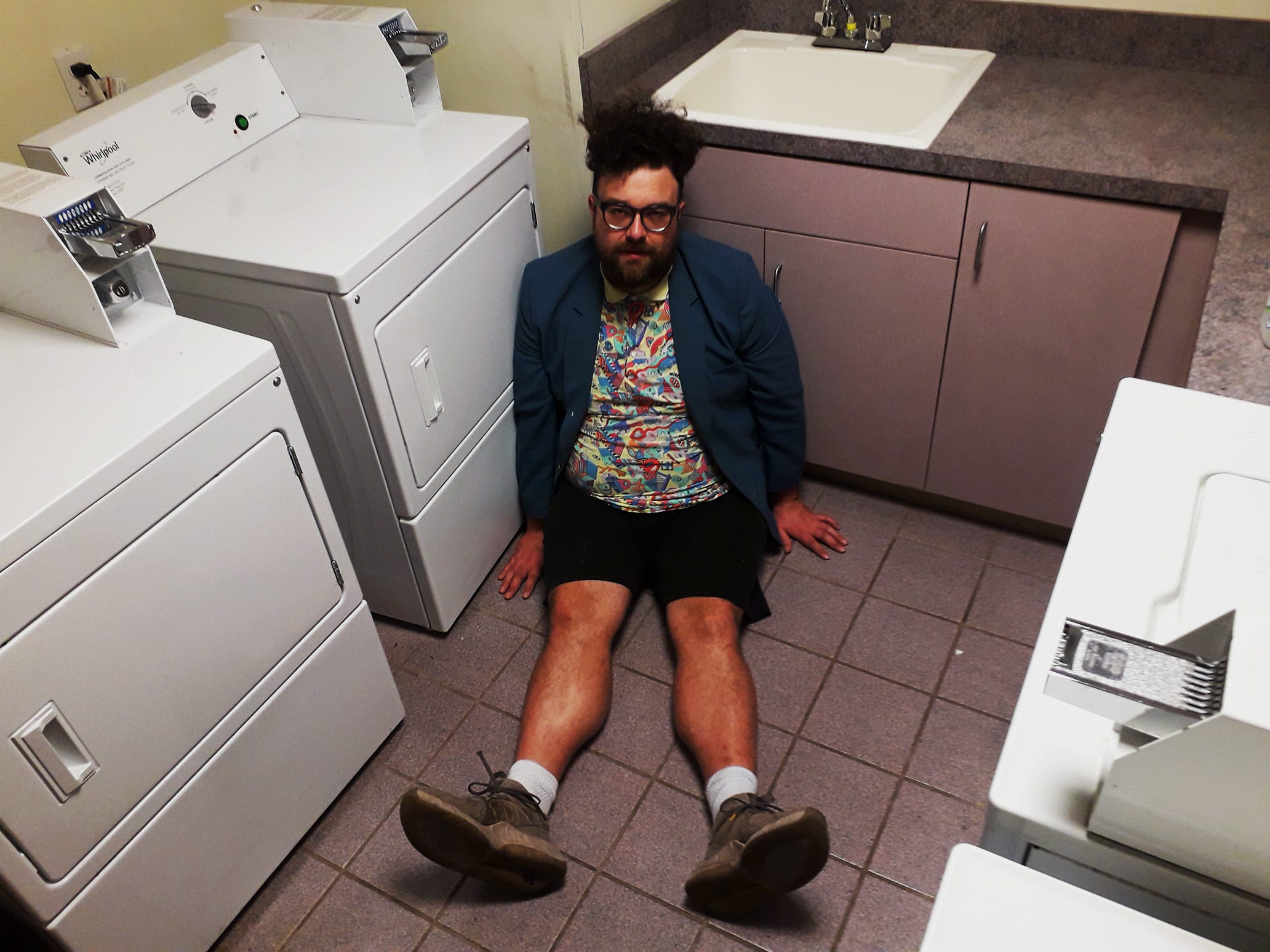
There’s a quote in Michael Brown’s book which I can very much relate to. You told him that for a certain period in your teenage years you were “slightly afraid of the world”, and being in your bedroom with a computer felt “incredibly comforting.”
Well, I was the youngest child in my family, so I was left to watch as much TV as I liked. I was watching Twin Peaks at six, seven years old. I was also left alone to just play on the computer, because my parents obviously saw I had an aptitude for it. There’s that feedback loop that happens when you are stuck with a Commodore 64, some video games and a couple of manuals for [programming language] BASIC. There’s something so cozy and comfy about it. Back then, it wasn’t defined by a market or an outcome, it was just something interesting to tinker around with. My friend’s father worked for the government post system, and he would bring home all the old computers. We were playing DOOM on it, doing all this crazy stuff.
In the early to mid-90s, everyone was listening to grunge and indie rock, but you were into 80s synth pop – music that was really out of style. Michael Brown interprets it as a reaction to your older brother, who was into ‘cool’ music. Would you agree with that?
I was thinking about this too. I started with Rage Against the Machine, Fugazi, Dead Kennedys.. that was my brother’s influence. My brother was also into bands like Weather Report; we had random jazz records and experimental stuff that we’d found in thrift shops, but 80s synth pop was in that cringe zone, and it was something I resisted at first. It wasn’t until I got into Devo that I just dove straight into new wave. At a certain point, I got really into The Knife, and that was definitely a slow break to get into that cringe level of 80s stuff.
My brother’s friends would make fun of me for listening to this rollerdisco music. Because it was kind of camp – not necessarily queer camp, but certainly in that it doesn’t take itself too seriously. I was coming from new wave and punk, going into synth pop, but it was coming up against that Commodore 64 chiptune stuff, and in a way, I’ve always combined the two. The dark wave industrial stuff was feeding into synth pop as well, and even 80s British heavy metal would end up in a lot of those Commodore 64 soundtracks. In my mind, it’s all the same blob, and that’s what fascinates me especially with Disasteradio, the video game use in and of itself, as kind of its own entity, a convolutional blob of all these different influences.
For many of us here in Europe, there was a natural pathway from 80s synth pop, EBM and industrial to IDM and hauntology. Was that important for you too?
Well, I listened to Boards of Canada’s Music Has The Right to Children daily, but I’ve only really just gotten into Aphex Twin in the last years. The other more Warp-adjacent stuff, like Squarepusher or Autechre… they were in the sphere, but I only encountered them online with the guys from the IRC channels, because a lot of them were based in the UK and [mainland] Europe.
Before that, I was actually just listening to Steely Dan for four years straight – I never want to listen to them again at this point. (laughs) But I just get fixated on one or two records and thrash the shit out of them. The next big group I was obsessed with was Add N to (X). They had that vintage broken synth sound, not on some kind of analog fetishism, but rather like a crazy art project. I remember seeing the cover of On the Wires of our Nerves, and it’s someone cutting a synthesizer out of this woman’s tummy. I ordered that, and then I managed to get all of their albums. That’s the side of EBM that I was interested in.
When you got into vaporwave in 2011, you’d been making synth pop and electronic music as Disasteradio for some years, so you were a bit older than your US peers. Did that influence how you reacted to vaporwave?
Yeah, I guess in that I felt able to immediately engage with it. The first albums I remember hearing were Midnight Television and the Computer Dreams/Napolian split on Beer on the Rug. I felt like I could respond to this, because this was just something that I understood, but I wanted to to do it in my own weird little way. With that first Eyeliner record, there was a frustration that I had taken so long to make Disasteradio albums that I just wanted to do something immediate and ephemeral, and I wasn’t really invested in any kind of payoff from it. Which was kind of silly, because [Eyeliner]’s been way more successful than Disasteradio ever was.
Midnight Television and Computer Dreams were both sample-based. A few months later, James Ferraro made Far Side Virtual, which was largely sample-free. Was he an inspiration to you?
Yeah, I listened to Far Side Virtual every day for months when it came out. I studied that record. I was also listening a lot to Fatima Al Qadiri’s EP Genre-Specific Xperience. It felt like what was happening was a culmination of what I was referring to as net art. It was the Tumblr era – a lot of italicized Times New Roman, Windows XP UI elements and these default wallpapers. I would include even Corey Arcangel’s artwork with his Photoshop gradients and his modified Nintendo cartridge; one of his other art projects was a command line interface that he wrote for Linux that would order Domino’s pizza. (laughs)
I wasn’t on Tumblr too much, but I heard these records, and I was like, “Oh, these are Tumblr kids making this net art music.” This thing was really interesting to me. I was never drawn to doing the sample-based stuff. I think it was more about the repetition and the curation – not in the sense of a DJ set, but the curation of a loop… That Computer Dreams record is very hypnagogic too. It’s using a DJing formality to basically produce this other feeling, and I guess it’s that feeling that I felt I could do and I wanted to do from scratch as a challenge.
Michael Brown talks a lot about the concept of post-irony in early vaporwave. With Eyeliner, it feels fun and ironic but there’s also this serious love and appreciation for music which is often frowned upon – like 80s synth pop, stock and production music, smooth jazz and TV themes.
Yeah, there’s a point with those library albums and soundtrack records where, once the disbelief and cynicism is suspended, it does become a genuine thing, and I love that duality. It’s like, I’m not being serious, but I am being sincere, you know? In making it, you’re devoting yourself to creating this very strange combination of things, and you kind of disappear into it, you can really lose yourself in that. The exploration of that is very cool.
It’s like being in the mall, and losing yourself in those moments, when you actually know that you’re just a consumer. There’s something very profound in that, because you’re giving over to something else. Like, you’re picking something up off the shelf and you’re jokingly going, “yes, this is me”, but then you’re sort of believing it for a second. It’s not nostalgia – maybe it’s a level of self-obliteration.
The promise that’s kept in these banal consumption goods, it almost becomes true, even if just for a second.
Yeah, it’s like treating the market or rather capitalism like God for a second, to try to interpolate that relationship, or just become it for a second. I remember this Twitter post, “Cocaine was a sacrament that the banking class used to commune with an entity called the market.” (laughs) It’s that kind of thing. It’s treating something unspiritual as spiritual, and falling into it for a second and seeing what happens to yourself. It’s very interesting, and at some point trying to describe it becomes ineffable. That’s what I love about it too.
That’s why we need music and art as a language to talk about it, and records like the Eyeliner debut, High Fashion Mood Music, manage to capture that feeling. Please talk about the circumstances in which that was made.
I was a broke freelancer. I was 28 or 29, and I’d been going through a massive breakup from a 12-year relationship. I remember it being a very cold winter in a very cold flat. We had this artist space where we would shoot music videos, this turn-of-the-century Victorian warehouse where they used to make batteries, and it had all these old woodfloors. There’d be icicles on the inside of the roof in the morning. Our olive oil would go cloudy. We were all shivering and completely broke. So I’m sort of putting a costume on, because I’m play-acting, making this fake advertising music, while I’m trying to basically survive. I was picking up all the sound design and composition jobs I could, and we were doing a lot of video work as well.
You basically made the real thing and the persiflage at the same time.
Yeah. But see, the commercial work didn’t really pick up so much until BUY NOW [in 2015], when I ended up working on sound design for KFC, Chanel or Panera Bread. That was definitely the most financially secure part of my life at that point.
When I first discovered vaporwave, I didn’t know any artists but just downloaded all the “Vaporwave Essentials” from those graphics that were floating around on Reddit. I think both High Fashion Mood Music and LARP of Luxury were on that.
Yeah, I was very grateful and humbled to be included on those alongside albums like Far Side Virtual. I assume it’s been very good for my visibility as an artist, and I think it was the first time that we saw Utopian Virtual as a subgenre in those sort of charts, which hasn’t been so much of a talking point lately. But I’m still a big fan of that, and being put into this sub-umbrella for vaporwave, I found that very cool.
In recent years, there’s been a lot of these Utopian Scholastic things themed around 90s and 00s encyclopedia programs like Microsoft Encarta, and that whole Y2K/Frutiger Aero-inspired strain of vaporwave.
You mean like trndytrndy, right? That record was totally blowing up. But it’s becoming something entirely different now. It’s so funny though, because Frutiger Aero wasn’t so much a cultural movement when it happened. I mean, you were there too – it was just something you saw and you knew, but it wasn’t aestheticized yet, like we’ve turned the whole ancient 80s music into an aesthetic, and that’s happening now with those sort of things.
Going back to the early vaporwave days – did you connect to it mainly online, or was there a local scene in New Zealand as well?
I was a little bit involved with SPF420, watching those TinyChat shows, but we also had this local scene around the Crystal Magic Records [CMR] crew. I wasn’t that involved, but we did have a few artists dispersed throughout New Zealand, like Fraser Austin from Crystal Magic, who was doing RealPlayer 7 and Feelings, and Chris Cudby, who was previously in Golden Axe, doing Power Nap. There was Splash Club 7, the Kerosene Comic Book crew, and all of these indie-adjacent electronic artists who were getting into vaporwave too. There was also Jónó Mí Ló, an artist who was a member of [Yves Tumor’s early vaporwave project] Teams; he’s from the States, but he relocated to Australia for a bit, and we would chat about vaporwave all the time.
Crystal Magic Records between 2011 and 2014, that was us [in Wellington] and we were doing vaporwave, but there’s also Satin Sheets up in Auckland, and he had a strong bridge to the States through 100% Electronica. We all got into vaporwave at the same time, so we were all engaging with it as a social circle as well, but as New Zealand artists, by default we weren’t looking that far abroad, because we’re not afforded that many opportunities to play in Europe or in the States. Having said that, Golden Axe did play a big European tour, and I’ve been to Europe four times.
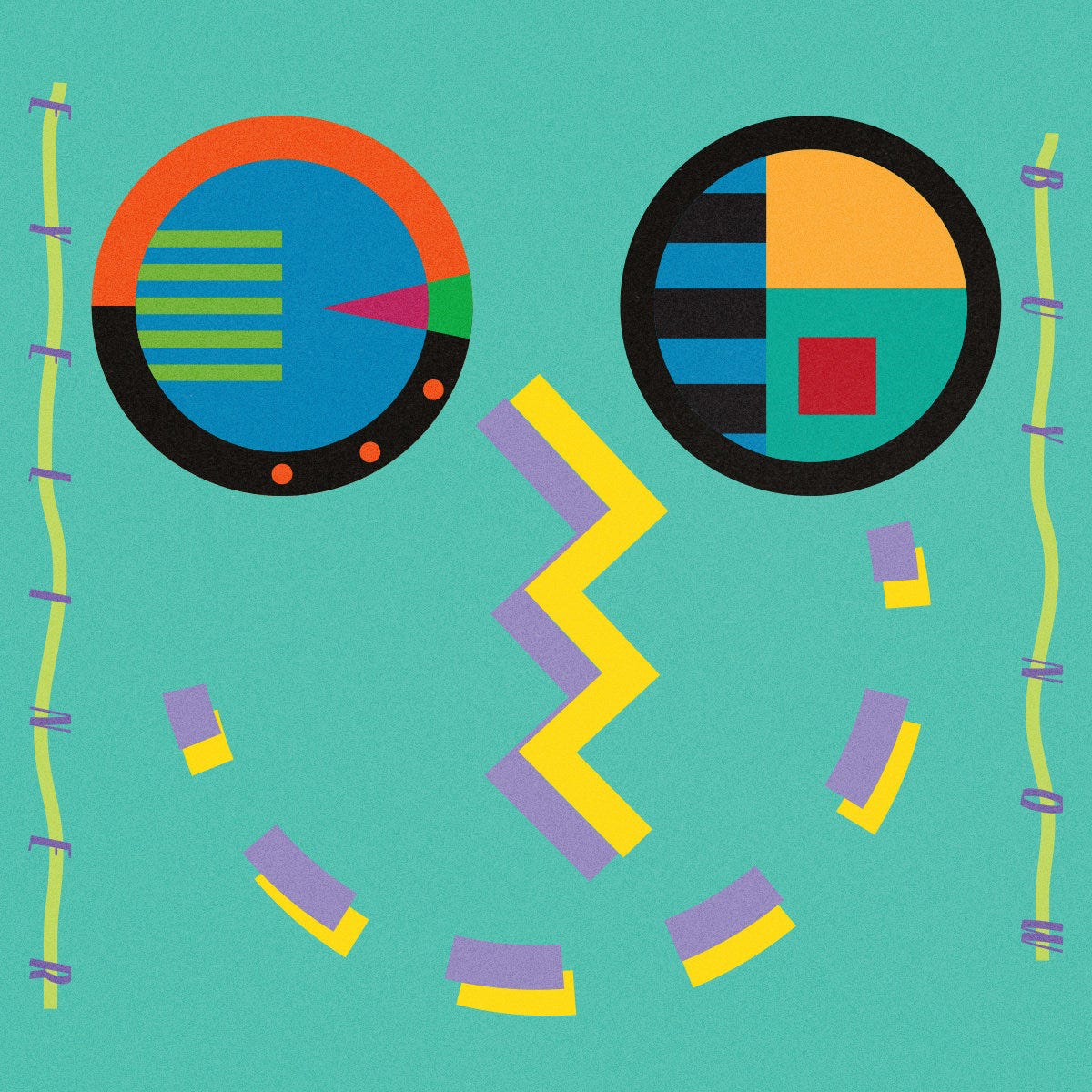
After the first two records on CMR, BUY NOW came out on the US label Beer On The Rug, which had previously released Floral Shoppe and other early vaporwave classics. How did that happen?
Beer On The Rug emailed me after LARP of Luxury, so they were waiting in the wings, and CMR was built around a social circle that was rapidly crumbling. We were all in our late 20s, also I think Fraser had overcommitted to the label himself. I would love to hear his side of the story at this point, but there are a few projects that got too stressful for everybody, and then it just stopped happening. I just got the distinct impression that Fraser wasn’t interested in putting out BUY NOW, so I sent it to Beer On The Rug.
Beer On The Rug was definitely ran a little haphazardly. I think nobody got paid, but I don’t think that’s the point. If you’re looking to earn a living on vaporwave, you’re looking at the wrong place. But being part of that label, next to Ramona [Vektroid] and Computer Dreams, was just incredible. Getting that album art was definitely half the equation, because they got [design agency] EyeBodega to do it. Actually, when they sent the first draft, my wife Chloe said, “That’s cool, but just ask them for something else, see what else they’ve got.” She’s a jeweler and an object artist, and I trust her in terms of aesthetic decisions. So the actual art for BUY NOW is not the original art but the second thing they made.
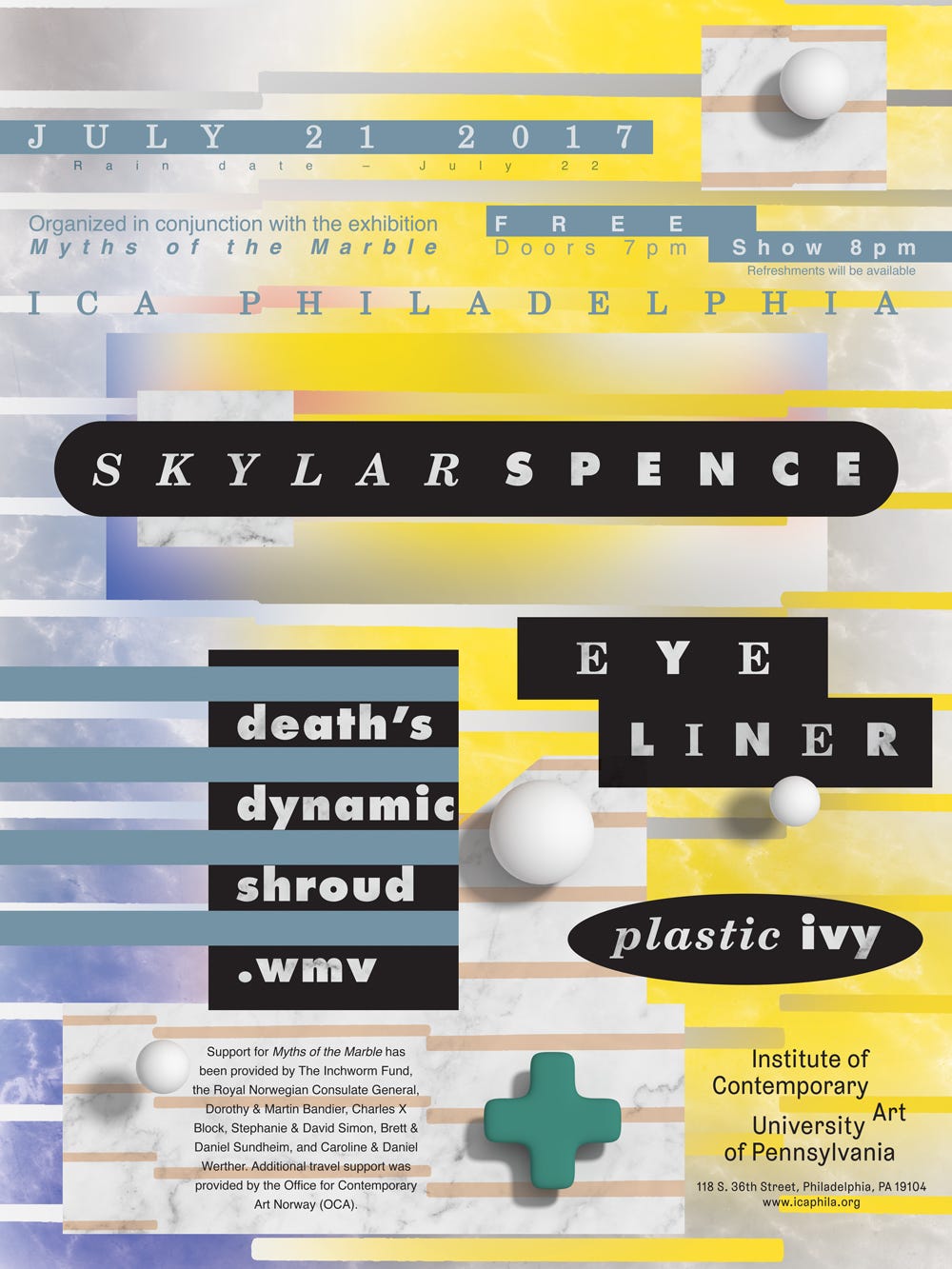
EyeBodega actually pivoted to being an art studio, doing more ceramics and that sort of thing, but they did the poster for the [2017] show that I got booked at the Institute for Contemporary Art in Philadelphia with Saint Pepsi, Death’s Dynamic Shroud and Plastic Ivy. I remember how blessed I felt as I was nervously peeing in the bathroom at this art gallery, and I looked up above the urinals, and there’s a poster of Laurie Anderson playing on two tape decks. Just to be part of all of that made me so grateful. I can’t say enough how important that album art and the kind of synergy of that image with the music was.
Musically, the first two albums were based in this sound world of Korg WaveStation presets, but for BUY NOW you switched to the Korg M1 and combined it with LinnDrum and slap bass. That’s such a simple but genius combination.
It was just an effort to try to restrain the computer. Limiting those possibilities from square one is so important to me. I’ve always wanted to do these very restrictive things. Because a computer can do whatever you want, and it’s tough when you just start throwing things together that are too disparate. If you’re pulling from the same palette, you can layer quite gratifyingly, otherwise things can clash by default.
Maybe it’s also from having worked for my father, because he started a stained glass studio in the early 80s. Seeing all these old men just using the same tools every day, that manual labor aspect of it… it’s like, you know your tools, and you take care of them, and you just learn how to use them very well, but you don’t have to go out of scope, because you know what your tools can do, and you’re there to do the job.
There is this trauma in synth pop: If you listen to an album by a band from like 1984, it will make sense, but a lot of bands got ruined in that period from ‘86 to ‘88 and they had to rehabilitate, or they became grumpy industrial bands. I don’t know what it was, maybe the mastering studios going towards CDs, so that everything came out brighter. So I’m trying to hold back against that wave by not installing new plugins – I just use the same plugins over and over, just try to get really good at it.
It’s that kind of roleplay like, “I’m a library musician, I bought three rack units, I have a mixing desk and an Atari 1040 ST [computer]”. You pick a process and you give in to that. I still use a lot of presets too. I started working with VST [Virtual Studio Technology] plugins when they first came out. Everyone was like, “Presets are disgusting, you should learn how to use your instrument.” But that soon becomes this very kind of macho value judgment. Just pick a preset and go for it. Someone’s made it, you know, so respect the person who made the preset.
In that sense, your music isn’t actually sample-free, because it’s crowded with the sounds of performers that just weren’t credited properly. Someone is playing on those presets. Someone played that slap bass on the Seinfeld theme.
By the way, that slap bass I used is an M1 preset, but the Seinfeld theme bass was from a Kurzweil sample library CD, I believe. But yeah, all those waveforms had to come from somewhere. I saw a beautiful reel from the guy who made the drum sounds for the roll in the [Roland] TR-909. I was like, “Oh my god, that’s crazy, the hi-hat is real!” Sampling does extend down to these little things made by, you know, random Japanese guys just goofing around.
I love hearing a preset that I started to spot. There’s a lot of [Yamaha] DX7 presets on those 80s records, like those DX7 tubular bells, that bell sound on “Nespresso”, which is on so many records. I just love that language, there is a hidden knowledge aspect to it. There’s something in the spotting of it, in the knowing of it, that’s very mentally chewy to me. I annoy my wife with it constantly.
There’s a longer gap between BUY NOW (2015) and Drop Shadow (2020), though you released a Disasteradio record, Sweatshop (2017), inbetween. Did you take a conscious step away from vaporwave then?
I was just obsessed and getting consumed by that Disasteradio album. I was working on Eyeliner tunes too, but I just got transfixed on the idea that I needed to finish this Disasteradio album, because it had been six years since the last one, and people were bugging me about it. It took so long, and it didn’t have the impact that I thought it was going to have, but I’m still glad I latched onto it, stuck with it and put it out.
When I was making BUY NOW, I was working for my dad again, cutting glass and stuff like that. So I was on the bus going to a manual labor job when I was listening to those tunes. With Drop Shadow, I’d moved out of downtown and into the suburbs, so I was listening a lot while I was driving. I was still doing a lot of manual labor jobs to get by though while working on Drop Shadow.
What were the musical inspirations for that one?
Well, my mum was in hospital for a while with some mental health stuff, you know, she’s bipolar, so it’s quite a heavy album for me. Drop Shadow has this arc where it goes a bit dark, and then it’s like, “Keep calm, carry on.” It’s interspersed with a lot of water sounds, and then it ends on kind of a Steely Dan light jazz thing. It was one of the more challenging times in my life of all the times I was writing a record.
I was listening to the group that did the soundtrack to Akira, they’re called Geinoh Yamashirogumi. They have an album called Ecophony Gaia, and it’s one of my favorite records. They’re a very crazy group that was started by this psychoanalyst doctor guy. They’ve also done albums of Bulgarian and Russian folk music and stuff.
The follow-up brb (2023) was your last Eyeliner record up until now. You’ve mentioned writing that one in Hong Kong?
Yeah, I was stuck there during COVID, and brb was very visibly influenced by that city. I moved to Hong Kong in February 2020, and then I couldn’t come home, but out of all the places in the world to be stuck, Hong Kong is the best. The courteousness of people there is just incredible. It’s bustling and hustling, but everyone was masked up and looking out for each other. I got quite a lot of exposure tangentially to Cantopop and watched a lot of Wong Kar-Wai movies there, made a good couple of friends. It was a very cool place to be.
The album I’m working on right now is based around vocal samples, very hauntological in a way. I’m thinking of it like kind of an internet signalwave thing, in terms of finding vocal samples on linguistics databases and looking for wav files on random FTP sites, or system sounds for telephone switching firmware, using dial tones and numbers, that sort of Kraftwerk Computer World stuff. That’s almost getting back towards what early Disasteradio was doing. I’m going for sort of a financial stock market thing as well, it has this kind of late capitalism thing going on… I’m really excited about this one.
This is a new Eyeliner album you’re talking about right now?
Yeah, I’m calling it, like, Pound Yen Euro Dollar. Because I was walking past a cash exchange thing in Hong Kong, and they had all the currency symbols all over it, and at one point it just said EYES. Look, I’ll show you. (writes the title on a piece of paper and holds it into the camera, the four currency symbols reading: £¥€$).
When’s that coming out?
Should be next year at this rate, depending on how busy I get. I am working in exhibition design for a museum, and we’re doing a big redevelopment at the moment, so we’ve moved our entire collection out.
Are you still following the vaporwave scene?
Well, I tried to listen to nothing but vaporwave for a month in winter, and I got quite depressed. (laughs) Also, I’ve had two kids back to back. My oldest is three and a half, and my youngest is 18 months, so it’s hard to follow all the new music. What have I been listening to? Some Bulgarian choir music, the Meat Puppets, Little Feet, a lot of this post-Grateful Dead sort of country rock, Nick Drake, Vashti Bunyan…
There’s always stuff that I need to listen to. There’s just so many of these Bulgarian choir cassettes that have been just uploaded to DSPs. I got into Tuvan throat singing as well, and I found this album with Bulgarian voices, a Russian jazz ensemble and Tuvan throat singing together! Like I said earlier, I get down these rabbitholes, and I find them hard to get out of.
Listen to Eyeliner on Bandcamp
Eyeliner’s Top 10 Vaporwave Albums
(unranked)
James Ferraro – Far Side Virtual (2011)
FM Skyline – Advanced Memory Suite (2019)
Power Nap – Shaped Canvas (2019)
computer dreams – computer dreams (2011)
Fatima Al Qadiri – Genre Specific Xperience EP (2011)
Luxury Elite – World Class (2015)
Saint Pepsi – World Tour (2012)
computer slime – ミスト(2013)
PrismCorp Virtual Enterprises – Home (2013)
midnight television – midnight television EP (2011)
Hola , Disasteradio Es Otro De Los Grandes Del Sonido Vaporwave. Es Una Pena Que Lleve Tanto Tiempo Sin Sacar Nueva Música Con Su Proyecto Más Personal. Espero Que Después De Está Buena Entrevista Se Animé Y Nos De Una Alegria Publicando Algo Nuevo. Un Saludo.