
Vapor Talks #36: 식료품groceries
Yes! We're Open – An in-depth conversation with Jordan Bortner
It was one of the most ground-breaking works in vaporwave history: The legendary 2014 debut by 식료품groceries, 슈퍼마켓Yes! We’re Open, remains a definitive all-time vaporwave classic and one of a handful of quintessential early mallsoft albums that really stood the test of time.
The person behind the 식료품groceries project is the artist and composer Jordan Bortner, a Texas native who’s been living in New York for many years. Aside from four albums released over a ten-year period under his most prominent alias, he’s been keeping himself busy making noise, glitch and experimental electronic music as JPEGSTRIPES or Null Object. As a home for his different projects, he’s founded his own independent label Consumer Electronics.
Needless to say, I was excited when Jordan agreed to take part in my Vapor Talks series. Find an edit of our conversation below – over the course of 90 minutes, we talked about his upbringing and career, his most important albums, what led to his separation from Dream Catalogue in the mid-2010s, why he lived in South Korea’s capital Seoul for several years after that – and why he feels slighty disconnected from today’s vaporwave scene despite having produced a bunch of the genre’s most well-known and lauded works.
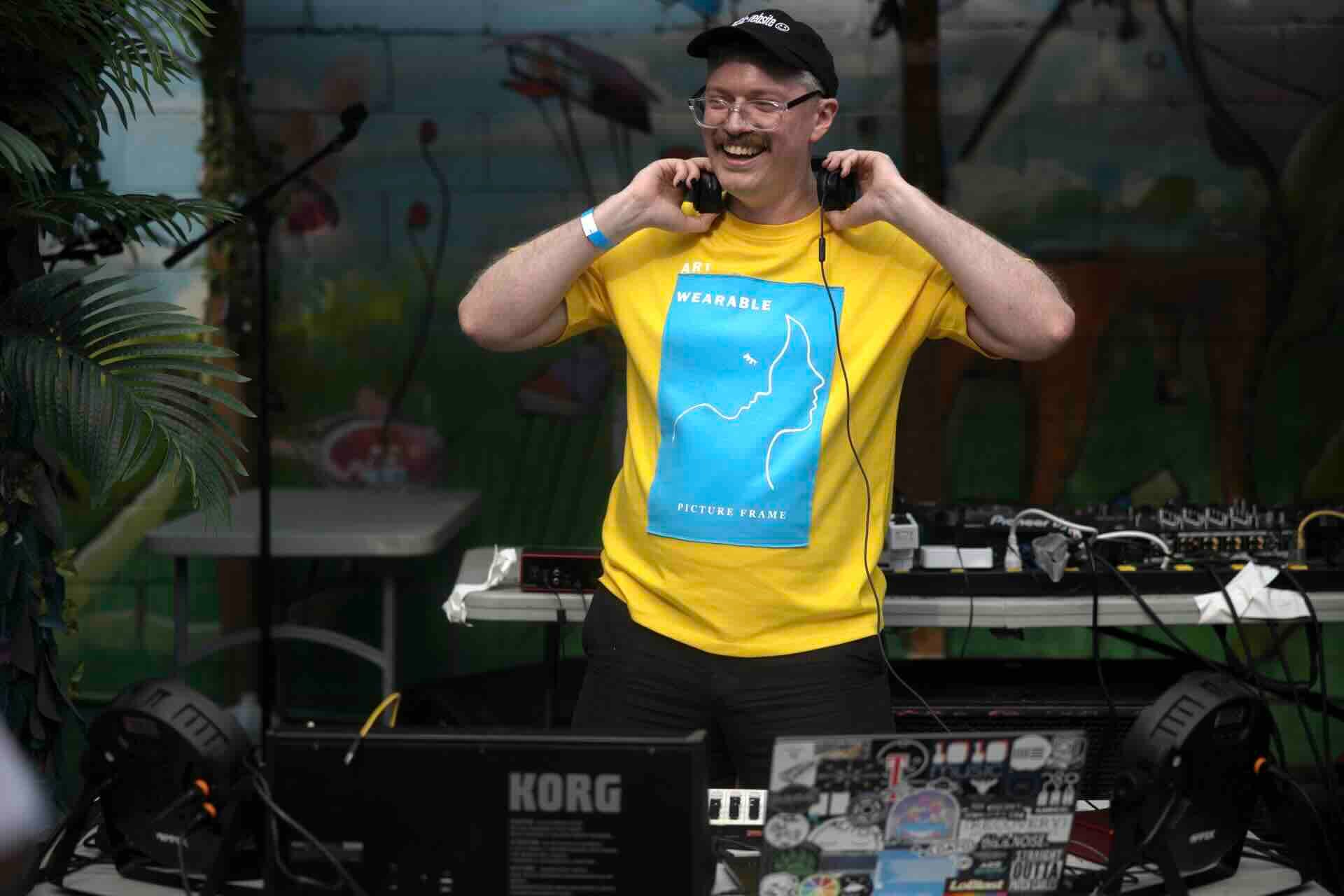
Jordan, did you grow up in a musical household?
Pretty musical. We had a piano – my mom was a pianist when she was younger. My sister plays guitar and bass, and when I was in middle school, I started doing percussion in band. At the end of elementary school, I’d also picked up the viola. I wanted to play the cello, but I had a friend who was playing the viola, and for some reason I ended up going with the viola too.
What kind of music was playing around the house when you were young?
Mostly just the radio. I didn’t really like pop music, but I thought it’s all that existed in the world. It wasn’t until I got older that I learned how to seek out other types of music. I was never a rock person either. My dad and my sister would bond over classic rock, and she would get into the types of stuff that he liked, but it never resonated with me so much, so it took a while for me to find my niche.
Were there any other formative people that introduced you to music that interested you?
Well, being in band and orchestra introduced me to classical music obviously, and I liked that, but I thought composers were something that happened in the past and they all died. Later I pieced together that there are still living composers when eventually in high school we got a new percussion teacher who was fresh out of college from Ohio, and he showed us all the most experimental 20th century music, like John Cage and Steve Reich.
Growing up in Texas, even the music taste is very conservative. I remember when this new percussion teacher joined the faculty, we had a little concert. There was just this room full of local families watching this young guy from Ohio do these insane modern performances – he was doing Kabuki-style theater and playing the marimba, and these people from Texas, they just can’t comprehend.
I was curious enough to stick around, and I was glad that he was there to talk to me about modern and experimental music. It wasn’t long before I was going to college to study music composition, but it was nice to have someone in high school who primed me and pushed me in that direction before I went off into the deep end.
Did you study in Texas?
Yeah, I studied music at the University of North Texas. It’s actually a pretty good music school. Its claim to fame is that it had the first degree in jazz in the country. The UNT’s jazz program is world famous. I didn’t go for jazz, but I was still in the music program.
Was there also a period where you got into indie music or subcultures?
I think music school made me into a bit of an academia snob, but then I was able to become a little more sensible. I had to discover that there were interesting people out there making forward-thinking pop music. That’s when I got really into Animal Collective and stuff like that.
So we’re talking about the mid- to late Aughts, I suppose?
Yeah, I graduated high school in 2007, and college in 2011. It was a great time for music actually.
Did you start producing music on a computer at that time?
I had always been interested in electronic music, and I liked making it on the computer when I was a kid, but it was just midi sequencing, and I didn’t know anything about production and working with audio. I went through college learning to compose for instruments of the orchestra. It wasn’t until the end of college that I made the choice to just sit in on a class that was an intro to electroacoustic music. It’s funny, because even trying to get into anything resembling music technology or electronic music was still through this academic lens. We were gonna study musique concrète and Pierre Schaeffer and this type of stuff – which is great, it’s all very important, but I didn’t learn much about just working in DAWs or anything like that.
I’m 99% self-taught when it comes to production. I had a friend who was a little bit more talented at it than me, who would help me out and show me how to do stuff. It was really tough for me at first. Honestly, it wasn’t until somewhat recently that I got a good synthesizer, a Korg with good presets, so I don’t have to think about sound design, I can just think like a composer. I don’t want to sit and try and make the sound myself. I just want to find a sound I like and work with it.
Did you learn about plunderphonics in your studies of modern experimental music?
I don’t think so. In music history class, you start basically in the middle ages with early music and you work your way up. At the end of the program, you’re in the 20th century, and it kind of fades out into like, “Well, then jazz happened, and then the Beatles happened.” We definitely talked about some early electronic music, but I think we stopped just before getting into the time when plunderphonics was happening. It was me getting into vaporwave that introduced me to that kind of stuff.
How did you discover vaporwave then? Was there a specific moment?
I moved out to New York in 2013, when I was 23. I moved with a couple of friends of mine from music school in Texas. One of them was that guy I was talking about, who was also a better producer than me, and he was very knowledgeable about what was happening in the cutting edge of music and culture.
Actually this was right before I moved to New York, but at the time, Oneohtrix Point Never had that label, Software, and an artist called Slava had just put out an album there called Raw Solutions. My friend linked me to a review of that album; it was written in Russian, and they [Software] basically said, “If anyone can translate this into English, we’ll send you a copy of it on vinyl.”
I think Daniel Lopatin is of Russian descent, but I don’t even know if he speaks Russian, so I don’t know if this was more for fun or whatever, but I had actually minored in Russian in college, so I remember sitting down at my computer with a coffee and just translating it. I’d come across words like [with a fake Russian accent] ‘seapunk’ and ‘witch house’, and I’m looking through my Russian-to-English dictionary, but I don’t see these words. So I’m googling it, finding out these are genres of music that I’ve never heard of. I eventually got the copy of the album on vinyl for translating it, and I fell in love with the record.
Back in the early days, I was on the vaporwave subreddit a lot and then downloading all this vaporwave from Bandcamp. There was an artist called Vincent Remember, do you know him?
Sure, he did the split with Telepath on Dream Catalogue.
Yeah, so I downloaded some of his stuff, and he just sent out an email, like, “Hey, thanks for checking out the music” or whatever, which he probably did for anyone who was buying his music. But I replied, and he was replying back to me. In his reply, he talked about mallsoft, so I was reading up on it on the subreddit, and honestly, it really resonated with me.
I’m not the type of person who can listen to something and just give you an immediate reaction. If I’m gonna give you my thoughts on an album, I need to listen to it repeatedly before I really build a relationship with it. With mallsoft, you’re listening to it like background music, and then in a future time when you’re listening to it, it might remind you of the time in the past when you were listening to it. It’s very aesthetic, almost like music as a flavor. Something about that resonated with me, so I just thought, maybe I’ll make music that’s leaning into this concept of mallsoft, and that’s when I started making my first 식료품groceries music.
That Slava album you mentioned was released in April 2013. You moved to New York in the summer, and 슈퍼마켓Yes! We’re Open came out in April 2014.
Yeah, I graduated from college, moved to New York and just hit the ground running. I was only in New York from 2013 to 2018 before I moved out and went to South Korea, and now I’ve been back in New York for about five years, but I feel like those first five years I was here, I lived a whole lifetime. I moved here in the summer of 2013, learned about vaporwave and started making it, and within six months, it got noticed by the owner of Dream Catalogue [David Russo alias HKE, ed. note], and eventually he asked me if I wanted to release an album on his label, which didn’t even exist at the time.
What were the inspirations for 슈퍼마켓Yes! We’re Open? I’d imagine early mallsoft albums like Disconscious’ Hologram Plaza (2013) and Hantasi’s Vacant Places (2012) would have played a role?
Those were the main examples then, and those were definitely some of the earliest influences, for sure. I was really into Vacant Places. I was obsessed with that record, and it was my first vaporwave purchase as well. I got it on CD-R. I love that record a lot. And nowadays, when I see people talk about mallsoft, they often put 슈퍼마켓Yes! We’re Open in a context with those records, which is very flattering to me.
Mallsoft was definitely a powerful thing and I resonated with its message, but I deviated from it a bit because I wanted it to be my own version of it. I’d have memories of going to this huge H Mart, a Korean grocery store, with my college friends. It’s a giant store, and it had so many cool things from different countries, but I was the only person who was actually interested in food. My friends and roommates were not very interested in cooking, but they obviously knew we’d have to eat. They would go to the store to buy food and wouldn’t know what to buy, because they didn’t know how to cook. It was very funny, like, “I’m here at the grocery store because I know I need to be here, but I don’t know what I want.”
Just that thought of being in a store and looking at all the things and being like, “I don’t even know what I’m supposed to be getting. I need something, but I don’t know what it is,” something about that feeling stuck out to me. I liked this mallsoft thing, but then I thought what if I swap the mall with a grocery store, and what if I swap the escalators and the fountains and the mannequins for aisles and sample displays and the announcements on the speakers. I just made it into a different public space.

You mentioned the ‘message’ of mallsoft. There’s this ongoing discussion about vaporwave being at its core anti-capitalist and anti-consumerist, but ever since those early Adam Harper articles in 2012, artists and listeners have been pushing back against that notion.
I think it’s complicated, because there definitely is a strong anti-capitalist message, but it’s soaked in irony. It’s not a protest message, it’s almost like, (speaks in a very soft voice) “Just let the capitalism wash over you. It’s okay, just let it happen. Just be a mindless consumer. You’ll be happy, you’ll have everything you want.” It’s that dystopian message, but over time it’s gotten diluted a bit, and a lot of people now just like making it. There are also all the people now who are just like, “Buy my t-shirt! Buy my album!”
That’s what happens. It’s just capitalism, I guess. It was a cool, weird thing at first, and then there was an audience for it, and then it became a way of making money. And I think it’s good for artists to get money. I definitely don’t know what I would be doing if I hadn’t had some success from that. I’ve spent my 20s being a struggling artist, so the fact that I was making money at all was fantastic. You know, at a time, people were cringeing about other people being like, “vaporwave saved my life” or whatever, but I actually agree [with that statement].
You said that HKE reached out to you and asked if you wanted to put an album out on his label Dream Catalogue. How did he even find you?
Well, I was just messing around and making mallsoft tracks for fun, and I would put them on SoundCloud. There weren’t a lot of people doing it, and that was the fun thing about the early days of vaporwave. It was all a very online thing, and anonymity was one of the pillars of it at the time. I would get a follow from someone who would have a profile picture that looked like it was from some old VHS tape, so I would follow them back, see what they’re making.
I used to work at Starbucks, and I would actually put on my mallsoft music in the café just to see if anyone would notice, because it’s like music that’s pretending to be music, you know? It’s like, “Don’t pay too much attention, this is just very normal music.” (laughs) I would just put it on and look around and no one would react. That was my testing grounds, playing it at Starbucks.
There was actually one weird dude who would come and sit at the Starbucks, and he definitely knew what was going on. I could just tell he knew, because he would come up to the counter and talk to us about music. I’d be playing some reverberated smooth jazz thing, and he’d be like, “Oh, this is great.”
That’s such a brilliant story.
Anyway, one day I started getting a lot of comments from David [HKE] on my SoundCloud tracks. I went to his profile, and he had his Twitter linked, and I saw he had just tweeted, “I’m laying on my bed listening to 식료품groceries.” I was like, “Wow, he really likes this.” Eventually it turned into, “When’s your album coming out?” I’m like, “Well, I guess I’ll have to make an album now.”
At one point he DM’ed me and said, “Hey, I’m starting this label called Dream Catalogue. It’s just me and this other guy, Japan Airlines. Just curious if you wanted to release your album on it.” I think 슈퍼마켓Yes! We’re Open was the fifth release on Dream Catalogue, and that’s how it started. David was a really nice guy. We used to talk all the time, but one day we just stopped.
It’s weird because a lot of the early people in vaporwave are gay or trans, you know – people like Vektroid, christtt or myself –, but there’s also a lot of these straight white dudes either just trying to make it about themselves, or just super fascist, Nazi-adjacent people. And unfortunately, some of my earliest vaporwave friends went down that route, so I stopped talking to them.
It’s funny – a lot of newcomers in vaporwave now have lots of friends who are really passionate about it too, but I didn’t have a lot of friends for a while. Because I had friends, and then I didn’t want to be friends with these people anymore, and then new people came, but they were doing their own thing. So I feel like a bit of an outsider now. I’m still friends with people who have persevered through that, like James and Tech from Death’s Dynamic Shroud, Marc from R23X and Kevin [alias] Equip. We all went on tour in Japan together, and I’m still friends with them.
[The second Neo Gaia Phantasy Tour took place in November 2019, ed. note]
The big Dream Catalogue purge happened towards the end of 2015. They took down many albums; apparently they were threatened with lawsuits due to unlicensed samples. Were your albums part of the purge as well?
Yeah. This is where things started getting weird. I guess David started drinking more and drunkposting on Twitter. It was just causing a schism a bit, and the fascists were revealing themselves. In my opinion, the beginning of the downfall was when they put out that Floral Shoppe 2 album. At first I was just like, “Oh, we don’t need a Floral Shoppe 2. That’s stupid.” Then I realized this was just a shitty album he made in one night when he was drunk, because he basically couldn’t believe that people liked this one Internet Club album that he thought was bad. He could have just not done anything, but he had to make it all about him.
This is also just before meme culture caught up to vaporwave, and then there was the copyright scare. I remember he sent an email through Bandcamp, and then I saw that my stuff was taken down. He didn’t tell me [personally] that he took my stuff down, it was just gone. That’s when I made my own Bandcamp and just put it there. It was great actually, because he never really paid me, so now people were just buying it directly from me. I didn’t even have a label at the time, I was just self-releasing. Only in the past couple years I started a label for myself, and I wish I’d done it a long time ago, but at the same time I didn’t have any money back then. I wasn’t really prepared for this to have any success, honestly.
I guess I wouldn’t have had any of that clout if the album hadn’t been on Dream Catalogue in the first place. I remember David sending me messages when my album was first getting attention. He would show me those charts that people used to make with the essential vaporwave, and my album’s on there. But then after that purge happened, it was just weird and I didn’t really get to talk to anybody about it until years later. When I went to Japan touring with DDS and Equip, that conversation finally came up.
I think I ultimately see myself as lucky in that way, because when Dream Catalogue started to become shitty and controversial, other artists wanted their music taken down, and they had to fight for it, because [David] just wouldn’t do it. I guess I was lucky that I didn’t have to have that argument, because my music [already had been] taken down.
Before that fallout, the second 식료품groceries album HOUSEWARES had come out in 2015 though. Let’s talk about that one, because I feel it’s underrated.
Honestly, a lot of 슈퍼마켓Yes! We’re Open and HOUSEWARES was made concurrently. I made the first two albums around the same time, and then it became this narrative. That’s when I decided it was going to be a four-album series. It took me years to actually do it though.
That’s interesting. To me, HOUSEWARES sounds much more experimental than the first one, more droney and ambient.
Like I said, I’m basically a self-taught producer, and making 슈퍼마켓Yes! We’re Open really pushed me outside my comfort zone – in a good way. I needed that as an artist. Getting into vaporwave was a powerful thing for me. Coming from an academic background, I had an almost elitist idea of what art is supposed to be, and vaporwave is very punk, very DIY. It’s about using whatever you can get your hands on, just try and make something with it.
In the beginning, I was like, “Oh, so I’m just gonna use other people’s music, and I’m not even using original studio recordings, but I’m just downloading it from YouTube, opening it into my cracked version of Fruity Loops and putting effects on it?” Like, “Ew, gross, This is disgusting.” (laughs) But it was liberating in a way, and it made me do things I wouldn’t have normally done. I really see every album I put out as a stepping stone, a snapshot of who I was at that time.
I would go to YouTube and look for people’s vacation videos or video scrapbooks, and I would just let these videos play and wait for something that sounded cheesy, sappy or silly, and then I would try and figure out what it is – or I would just use that, which sometimes wasn’t the best quality version of the song. I didn’t really care at the time. I wasn’t precious about it. That was the punk part for me – it doesn’t matter if it’s the highest quality, just use it.
I was just trying very hard to make an album that didn’t sound terrible and somehow made sense. People liked it, but honestly, I think it was more about the effort and the story and the time and the place, and the fact that vaporwave was emerging. It was not even 100% about the actual music and more about the statement. I can’t tell you it’s my favorite of the albums that I’ve made, because it isn’t.
When it came to HOUSEWARES, I had a much better sense of what I was doing, and I tried to work with chopping things up more. In the first album I still worried that if I tried chopping things up, it would sound stupid. I tried to apply a bit more of my academic musical understanding in the second album. I always tried to do something a little more than just play the music, like decorating things with recordings.
For 슈퍼마켓Yes! We’re Open, I had this recording of a room full of people talking. I’d had it for years and just never had a reason to use it. I was just going through the backlogs of things I’d recorded over years and now I’d find a use for it. I had an audio engineer friend who’d taken one of those binaural microphone heads into a subway platform in New York, so he had these binaural recordings of subway trains. I used that on HOUSEWARES, it’s on the second track, “지하철Morning Commute”.
“I view 식료품groceries as a thing that I did, but I’m kind of done with it.”
After HOUSEWARES, there’s a two and a half year gap until your next album. Those years, 2016/17, always strike me as a general watershed in vaporwave history, also a generational shift.
Yeah, I think vaporwave has gone through multiple waves very fast, because it’s such an internet genre. I feel 2016/17 is when mainstream culture caught up to vaporwave and it became a huge meme. Suddenly everything was just purple and palm trees and The Simpsons for some reason. It was tough, because people didn’t think of vaporwave as a serious genre. I mean, it came from a joke at first, like all good things came from a joke, and then people made a joke about the joke, and it’s like, “No, you’re not really getting it.”
It just got chewed up and spit out, and it was hard after that happened. In 2018, 2019, it felt like you couldn’t really say that you like or make or listen to vaporwave, because everyone was just like, “Oh, you’re still on that meme?” No, it’s not a meme, it’s actually a real thing… Well, either they don’t get it, or they think that it’s just not cool anymore, that you can’t talk about it anymore.
Your third album 인터넷 쇼핑 (Ascension) came out in December 2017. It seems like all that vaporwave drama slowed down your release schedule.
Like I said, I came up with this concept for four albums, but I was also terrified of the idea of sounding too repetitive. I don’t want to put out something that just sounds the same, like I’m just trying to recapture this former glory. I was very self-conscious about the fact that it had been [almost] three years between HOUSEWARES and 인터넷 쇼핑 (Ascension), because I really wanted to keep the momentum going. Looking back, three years doesn’t feel that long, but at the time I was just like, “Everyone’s forgotten about me, it’s over, no one’s gonna care when I put this out.” That wasn’t the case, of course, not at all.
For 인터넷 쇼핑 (Ascension), I wanted to take midi music and make that into audio samples, but my original idea was actually to do a compilation or a collaboration album. I messaged all of the vaporwave musicians I knew, like, “Hey, can you make something for me to sample and then make a track out of?” But nobody replied. Actually one person did, and it was christtt, which made me realize the problem, because he was like, “I sample music and chop it up, but I can’t just make original music.” And I was like, “Oh.” I was asking people to do original compositions, and no one knew how to do that. I hadn’t really thought of it.
Then I thought, well, I have a degree in music composition, I should really just put that to work. I’d been making midi music before, but always found it sounded cheesy. Now I thought, so what if I just lean into making cheesy midi music? Just do it on purpose, you know? So I just made these original tracks, and I played them on my keyboard, recorded them, added effects and mixed them, and then I treated it like sample material, so I chopped it up and just used it as audio.
Had you actually heard James Ferraro’s Far Side Virtual at that point?
Yeah, definitely. I was a big Ferraro fan. I don’t think I made it necessarily to sound like James, but there’s definitely a connection there with Far Side Virtual, and also some of Vektroid’s aliases.
I can totally see that. On some of her projects from 2012 and 2013, like the PrismCorp albums, she was already anticipating all this Utopian Virtual stuff. In my opinion, she basically invented most subgenres, including vaportrap and signalwave, in a period of just two or three years, starting in 2010.
She’s an unbelievable musician. And I hope she’s doing well, because I always see her struggling on the timeline a little bit, and I’m like, “I really want you to be okay.” I haven’t talked to her in a long time. I’ve gotten the sense that she’s not interested in talking about vaporwave anymore – and I get it. I’m just like, “You have so much potential and you have an audience, so you don’t have to make vaporwave. If you make something, I guarantee you, people will want to hear it.”
I agree. She’s not released anything in a few years though. But she’s streaming on Twitch every other day.
I’ve seen some of her streams. Even those are brilliant. It’s all down-sampled VHS quality, and she has this amazing avatar and these insane effects and things that you can do in the chat that she’s programmed herself. It’s incredible.
Actually, your JPEGSTRIPES project reminds me of her Fuji Grid TV alias, like an early broken transmission thing.
That’s nice of you to say. Fuji Grid TV definitely inspired me to shift toward the VHS stuff. I do like the broken transmission or signalwave type of sound, but I don’t think I do it the way that other people do it. I do it in a more mallsoft kind of way, where the sound is not meant to be harsh, but more like, “Oh, you fell asleep with the TV on”, that kind of feeling.
I’ve had the JPEGSTRIPES project since I was in Texas. It’s also just my online name, and I consider it as my main project. I view 식료품groceries as a thing that I did, but I’m kind of done with it. JPEGSTRIPES came about because I was interested in making noise music and glitch art, and that was even before I got into vaporwave, and when I then discovered vaporwave, I felt very at home because people here also liked VHS tapes, video games, digital art and noise music.
JPEGSTRIPES is about VHS audio samples, corrupting video games and recording the output from that, making albums out of that material. I never know what to call this music. I like glitch, but when people say glitch, they basically mean hip hop with a weird beat. When people think of noise, they think of Merzbow and harsh noise walls, something more analog. Mine is kind of hard to describe. It’s just corrupted video game music. I guess if I gave it a cute name, people would like it more.
Like mallsoft.
Well, when I put out 슈퍼마켓Yes! We’re Open, I threw in additional [tags] that I thought were funny. People were using computergaze at the time, so I threw in aislegaze. Some people took that seriously. I saw people online talking about aislegaze, and I was like, “That was a joke.” (laughs) But I mean, mallsoft was also a joke, so who cares?
What’s Null Object?
That actually came from the idea of just wanting to make more straightforward dance music. At the time, lo-fi house was becoming popular. I was really into lo-fi house, and I thought there were a lot of similarities to vaporwave – it’s house music, but it’s also very analog, with lots of samples and pitched down things, so I had the idea to apply some vaporwave concepts to lo-fi analog house music.
The idea for Null Object actually came from a job I had. I was working at a taxi company doing customer service. It was my first tech job, even though I wasn’t working in a tech role, but it was a startup and my first job that wasn’t food service. I was working a lot, and it was really disorganized. I had to deal with angry customers and drivers. Things just weren’t working. At some point I vowed that I was going to make an album of music about this experience, and that became Cooperative Taxi Station. The artist name, the album title and the track names all were just jargon from my job, these weird phrases that I just thought were funny or interesting.
It’s a vaporwave thing to use the corporate tech lingo – that strange, abstract but flowery presentation deck language.
There’s a definitely a thing of evoking this corporate atmosphere and stuff, but this was very real to me – it was my actual job. And then of course we all got laid off at one point. I did continue with the project though. I’m just using it as an outlet for straightforward types of dance music. It definitely has its own oddities and weirdness, but it’s not drone, it’s not mallsoft, it’s something you can dance to.
I read in the biography on your website that you spent two years living in Seoul in the late 2010s. Tell me about your time in South Korea.
Well, in the year after getting laid off from the taxi company, I put out my first physical merch, and I started to get the hang of it. I also spent that year applying to teach English in South Korea, because it seemed like a good time to just do something different. I’d always wanted to travel, and people kept saying that one way to travel easily is to just take a job in another country, because then you’re just paid to be there.
I got the job, moved out of New York and brought all my stuff to my parents’ place. After a couple of months I flew to Korea. We had two weeks of orientation and training, and I didn’t even know where I was going to be until I was there. Then I got assigned my school, and it was in Seoul, which was great, because I wanted to be in the capital. I taught English in elementary school for two years there.
I was traveling, I was seeing the country. I visited Japan twice, visited Malaysia and Taiwan. I wasn’t making much music though. I would try to go to shows, but in Korea, shows tend to start really late, and the trains don’t run after midnight, so if you’re going out, you’re going out until the early morning. As a teacher, I have to get up at 7am, so I just can’t do this very often.
In my second year I was starting to feel like I left New York right at at the peak of my musical career and just disappeared as things were getting good. I felt out of touch with people and art and music and vaporwave and just everybody. I don’t know, it was becoming a little depressing. When COVID happened, I almost felt like a little bit of relief, because now nobody is doing anything, and everybody is stuck at home, and I feel like I’m not missing out – which is a very selfish thought.
So I moved back to the US, and I’ve struggled to reconnect ever since then. It’s just not quite the same. Global politics have really screwed things up. The reason things were the way they were in 2010 was because the world was just doing better. I didn’t use to be the type of person who listens to the news all the time, but now I’m a news junkie, and that has taken away from time that could be spent doing more creative and fun things. Everything’s about survival now. For the past ten years, things have been tough.
I would love to return to a time when things felt better, but I get the sense that there’s a new scene bubbling up somewhere. I can see that the new generation of artists are trying to cook up something, and I’m curious to see where it goes and if there’s a place for me in that anywhere. I think there is a light at the end of the tunnel, and there’s a bright side coming.
In August 2022, you’ve finished the series by releasing the fourth album, 폐점 . I’ve seen people online referring to it as the white album, others say Closed, or Closed for Business. How do you say it?
In my head, I refer to it as Closure, in the sense of the store closing, but also as in the summarization of the narrative, the closure of the story. Part of the narrative over time has been the album and track titles becoming increasingly difficult to understand. The first album is almost all English, the second album a little more Korean, and the third album has a Korean title and then an English word. The track names are all English, but they’re all in that monospace text. And then the fourth album, you have to dig to get to what the names of the tracks are. I wanted to make it a little more difficult, not to listen to, but to get to know.
It doesn’t even have separate tracks, there’s just the A side and the B side, even on the digital version.
Yeah, some people have been mad about that. But I wanted it to be like that, because one, it’s supposed to be listened to all together, and two, I’m not doing this to be nice to you, I’m doing this to make it difficult. There are track names, they’re just in the album artwork. I’ve provided an English translation for everything as well, so that’s out there on the internet.
I’ve talked to a few younger producers who were really influenced by that album, especially from the signalwave scene.
That’s awesome. That album came out just toward the end of COVID, and I don’t really know what people think about it. I haven’t heard people talking about it much, but I definitely worked really hard on that one. I said before, my albums are stepping stones, and I feel like by the time you get to Closure, it’s clear that I’ve improved as a producer and composer. I’m very proud of that album. I love the notoriety that my early albums have given me, but I think my albums have only gotten better over time.
Listen to 식료품groceries on Bandcamp
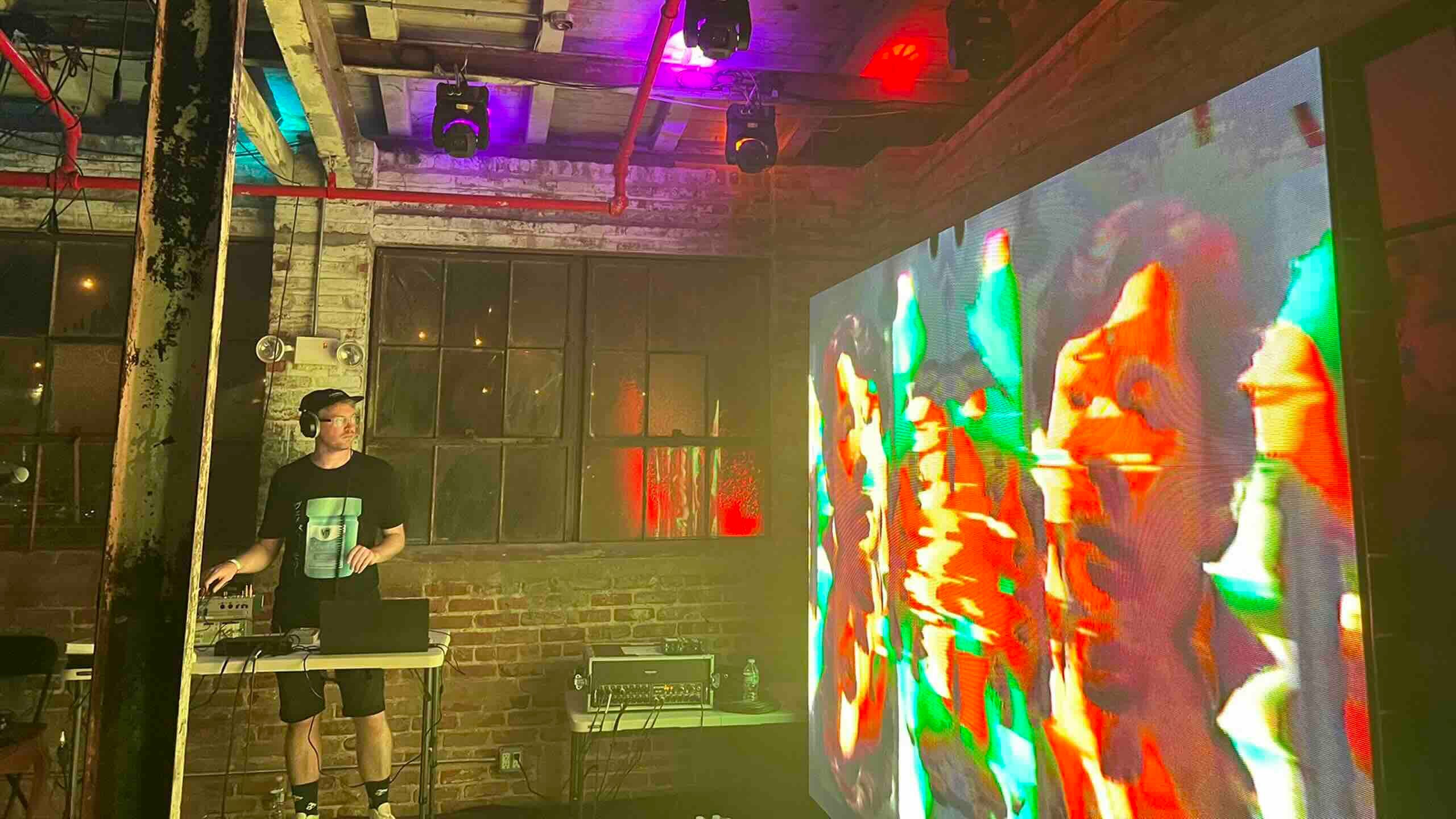
식료품groceries’ Top 10 Vaporwave Albums
(unranked)
“A list of the 10 most influential to me when I was new to vaporwave and listening to it the most.”
Miami Vice – CULTURE ISLAND (2012)
death’s dynamic shroud.wmv – シェンムーONLINE (2014)
Music For Your Plants – Expedition Chant Cup (2012)
INTERNET CLUB – REDEFINING THE WORKPLACE (2012)
Hantasi – Vacant Places (2012)
YES USB – NO USB (2012)
Bye-Product – .GIF (2012)
CVLTVRΣ – Virtual Life (2014)
General Translator – CONTEMPORARY (2013)
Eyeliner – High Fashion Mood Music (2012)
Re: computergaze and aislegaze, Johann and I invented leafgaze in, I think, 2019. Although it only ever really existed in our minds. So any Vaporwave producers out there who are looking for a tag, please do make it a reality. (It's basically shoegaze for listening to when lying down on a grassy floor underneath a tree, looking up at the leaves.)
Thanks for the interview. Went and immediately checked out the music on bandcamp.