
Vapor Talks #34: Architecture in Tokyo
The electronic music producer, now active as Young Muscle, talks about his beginnings in vaporwave and his creative evolution
In those halcyon days of the early 2010s, many of the nascent vaporwave scene’s key figures were still teenagers: Vektroid was 18 when she made New Dreams Ltd., Internet Club was 15/16 during their legendary streak of 2011/2012 albums. Chaz of SPF420 started hosting online parties because he was underage and couldn’t get into IRL shows.
Around the same time, a 16-year old from Detroit’s suburbs started producing music under the artist name Architecture in Tokyo. Ben, that’s his real-life name, was immersed in that primordial online soup of chillwave, synthwave and early vaporwave. His debut album Summer Paradise came out in June 2013 on the Business Casual label and is widely regarded as a bonafide genre classic today, even ending up on a recent Reddit list of 30 ‘Vaporwave All-Timers’.
Ben would drop another full-length album on AMDISCS the following year, exploring the future funk style that fellow producers like Saint Pepsi and Macross 82-99 had just come up with. After releasing a few more singles and SoundCloud loosies, the Architecture in Tokyo project slowly fizzled out during vaporwave’s generational shift in the second half of the 2010s and finally dropped off the radar.
Almost a decade later, Ben is still DJing, producing and releasing music. He might have left vaporwave behind, but since the start of the pandemic, he’s been making original tunes under the name Young Muscle, a project heavily influenced by UK bass and experimental techno. His most recent EP, Music Is My Perverse Fantasy, came out in February 2026. In the conversation below, he talks about his early days in the vaporwave scene and the creation of his classic album, and ponders whether he’d ever return to the Architecture in Tokyo moniker.
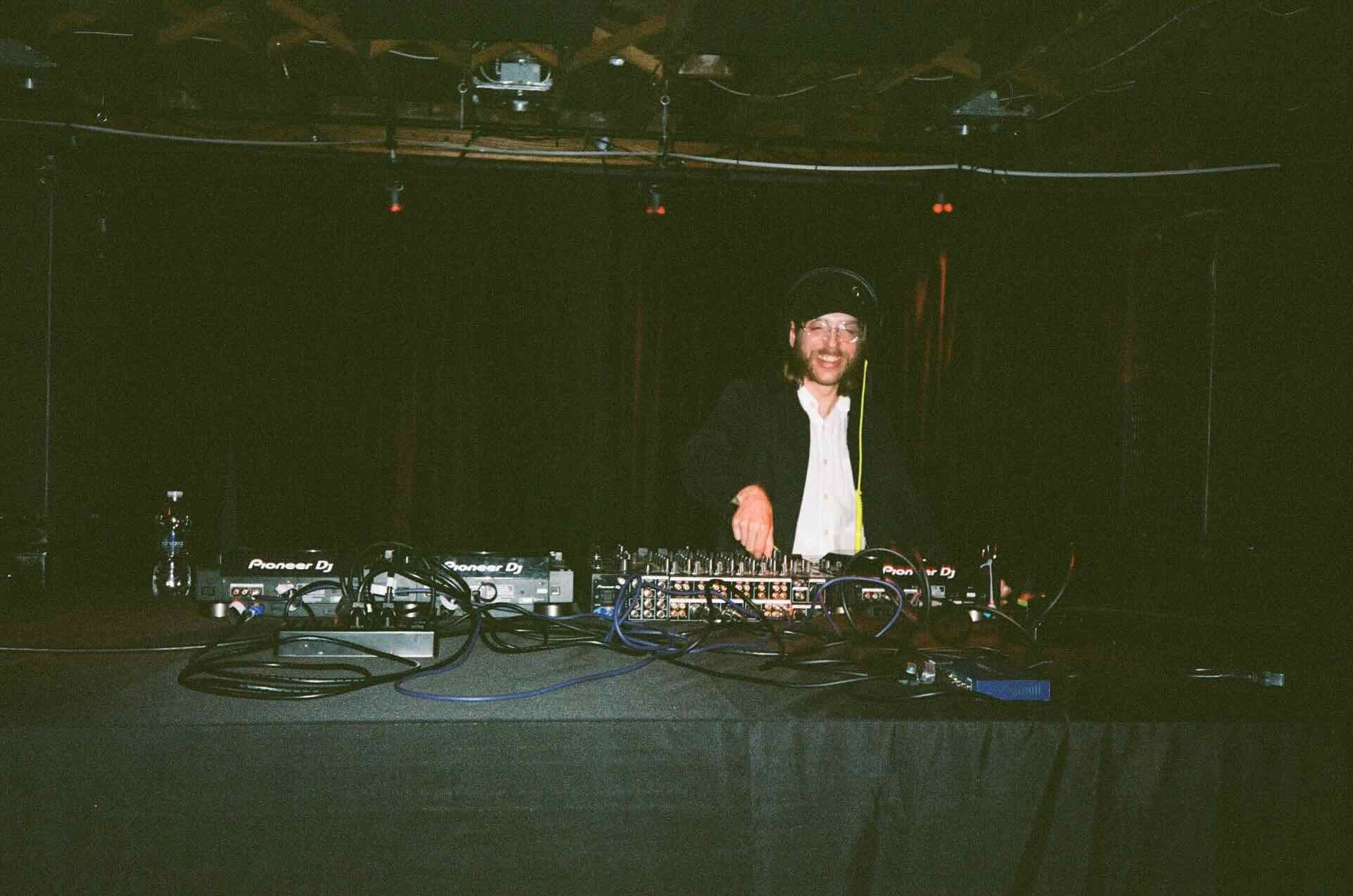
Did you actually grow up in Detroit, Ben?
I grew up in the suburbs, about 25 to 30 minutes outside Detroit, an area called Sterling Heights. I lived there till I was 18, then moved down to Detroit and have lived there since, so it’s been a little over 12 years now.
Was it a musical household that you grew up in?
Not really. I grew up with my mother, and she grew up playing piano, but it was never something that was transferred on to me. I took some piano and violin lessons when I was a kid, but both didn’t stick for very long.
In music technology class they taught us to use GarageBand. That stuck with me and laid the groundwork for my experiments in Ableton when I was a teenager, which is what led to the Architecture in Tokyo project. But my exploration with music came from my own seeking out of music culture through the internet.
What kind of music were you into as a teenager?
I was a very avid follower of imageboard culture, and I browsed 4chan’s music board a lot. I found a lot of electronic music through it. I grew up listening to hardcore punk and folk music, but both felt kind of inaccessible, whereas electronic music felt like something that I could do.
If you were into hardcore punk and folk, did you ever play in any bands?
I didn’t, I was mostly alone in my bedroom making music, but I made it with the reference in mind that I wanted to make it for my friends. I had a close group of friends who were the same way, where they wanted to be in bands, but they never learned any instruments, so they spurred me on to make music for them and cheered me on in that sense, when I was starting to make vaporwave.
Did the cultural heritage of your city play a role, with Detroit having been such an important hub for electronic music since the 80s?
You know, it’s very funny. As close as I was to the city, we were always more interested in the sounds that were coming out of the UK, from places like Sheffield. I was very interested in IDM as a teenager, and it felt a little bit too inaccessible to make during that time, but it was still a very big influence on me. I grew up listening to a lot of Aphex Twin and Boards of Canada. I’ve listened to Music Has the Right to Children more times than I can count. I had a bunch of friends who listened to glitch hop like Flying Lotus and Lone, so that kind of rubbed off on me too.
Aside from imageboards, were you into blogs as well? Altered Zones comes up a lot when I talk to people about proto-vaporwave and internet music.
Yeah, I was following blogs like Tiny Mix Tapes and a bunch of others. I can’t remember them off the top of my head, but Tiny Mix Tapes was one that contributed to Altered Zones. I remember first learning about Oneohtrix Point Never from there. They did a piece about his project Infinity Window. Learning that he was using just a handful of synthesizers and reverb pedals, that felt very accessible and inspirational to me. It felt like something that I could do.
I had a MicroKorg growing up as a teenager – I still have it, but I don’t use it anymore –, and some of my earliest experiments, before I even started making vaporwave, was messing around with the MicroKorg, running it into Ableton, putting reverb and delay on it, and seeing what I could get out of it, just trying to push the synthesizer to its limits.
Were you tapped into the scene that started meeting on the early social media and streaming site turntable.fm in 2011/12?
I was. One of my friends, Alfred, was tapped into that scene, and I remember venturing around the website and listening to all the things that were coming out. I wasn’t an avid user by any means, but I did use the site from time to time. I do remember going there and listening to the music that my friend Alfred would play.
Vektroid was a huge influence on everyone there, right?
Definitely. A few of my friends were friends online with Vektroid when she was still going by Vektordrum. The music that she was making blew my mind. Still to this day it blows my mind that she was making proto-synthwave back then, stuff that would remind me of Com Truise.
I remember Vektroid’s New Dreams Ltd. album was featured on Altered Zones as one of their albums of the week, and I remember being really intrigued by it before I knew that Vektroid had created it, because she made it under an alias [Laserdisc Visions, ed. note]. I remember thinking, “Who is this mysterious artist that is creating these crazy tracks that sound like the nostalgic early 90s music that reverberated around in the corners of my head?”
It felt very reminiscent of early internet that I remember as a child, the kind of mystery of the internet, before you could really grasp things that were going on. At least for me, as someone my age, it reminded me of the mystery of not knowing who an artist was, or seeing these images of foreign culture, not really knowing a lot about it. That mystery was the main point that connected with me.
Like many other vaporwave producers, you were still a teenager at that point. Did you connect with many other kids in that early internet music scene?
Yeah. I remember even reaching out to Vektroid as a teenager, and just making a lot of friends through Facebook. There was this ‘Weird Facebook’ scene that was going on in the early 2010s. Actually, New York Magazine wrote about Weird Facebook once. It was a scene of music producers and internet artists who were working in graphic design, creating just abstract, absurdist avant-garde material. Seapunk too spawned out of Weird Facebook around the same time. People from Weird Facebook had a lot of clout in the seapunk and early vaporwave scene.
I remember some of the collabs that I took on with Architecture in Tokyo ended up coming from Weird Facebook and making friends in that scene. Parrot Jungle 95, he was one of the Facebook friends that I made, Yung Bae too. We had a Facebook group chat with a bunch of other future funk and vaporwave producers called Healy Hunks. We would talk to each other on there, and that’s where some of my early collabs spawned out of.

Summer Paradise came out in June 2013, but when did you actually start producing under Architecture in Tokyo?
To be honest, there wasn’t any particular moment that started it. I was just very influenced by chillwave and glitch hop, and then it was the influence of albums like Skeleton’s Holograms [2010], Com Truise’s Galactic Melt [2011], Laserdisc Visions’ New Dreams Ltd. [2011] and Oneohtrix Point Never’s Replica [2011] – all those projects made me want to start making music, because learning that they were all sample-based felt very tangible to me, like something that I could do.
I was around 16 when I first started making music, in an attempt to make chillwave-esque stuff, but after hearing Vektroid and Skeleton [the anonymous proto-vaporwave artist who went by 骨架的, ed. note], I wanted to make those sorts of things because it felt possible. Even though at the time, when I was making vaporwave, initially it was just an experiment. It was never fully intended to be heard by so many people, it was something just to pass along on to my Facebook friends and to my real life friends.
I just wanted to replicate those early internet memories that I had of foreign culture, and the other sample-based music that I was hearing from places like Facebook and 4chan’s /mu/ board. I wanted to have a hand in that, even if it just initially was for real life friends and internet friends. Early Architecture in Tokyo was just me trying to capture that sound and capture that feeling of browsing the internet and coming across these mysterious reference points that felt very nostalgic in a way.
How did you hook up with Business Casual?
I think John [Zobele alias christtt, founder of Business Casual, ed. note] reached out to me. He might have reached out through Facebook or SoundCloud, one of the two.
The same year, you put out two more singles – one was Marble 大理石, a collaboration with a producer named Ultra, and the other one was a split record called Lilac ‘97 with another artist called Drip-133.
Ultra was a SoundCloud friend, a fellow vaporwave producer, when things were kind of kicking off in the scene early on. I don’t think he ever got as much credit as he deserved, but he was one of the early vaporwave producers that was making these mysterious tracks without any sort of information on who he was, where he was located or things like that.
Drip-133 was actually a close friend of mine. As teenagers, we lived very close to each other, and we ended up deciding to put out a split tape. It came out on Memory No. 36, which was an internet label that one of my Facebook friends was running.
In 2014, you released your second album, the self-titled Architecture in Tokyo album on AMDISCS. There’s an interesting shift in direction, the first one being influenced more by chillwave and classic vapor, while the second one has a focus on future funk and seems influenced by filter house and nu disco.
Yeah, with the rise of SPF420 and hearing my internet friends making future funk and chopped up disco edit type music, I shifted my approach in sound and composition. Daft Punk was another big influence that had always kind of been in the background, as well as a lot of the artists on KEATS//COLLECTIVE and people like Ryan aka Saint Pepsi. His album Hit Vibes was a very big influence on me when I switched to rather focus on this disco-house type of music.
Did you get a lot of feedback to those first two albums at the time?
I think I did. I don’t remember exactly, but I know the first Architecture in Tokyo album exploded on SoundCloud. It definitely took off and had this life of its own that I didn’t expect out of it, and then I felt a little pressured to create something to follow up, but I decided to shift in a different direction to keep the sound from going stale.
How did you experience those years after the second album came out, when the vaporwave scene evolved into several different directions?
It felt like vaporwave and future funk had gone into split directions, with vaporwave becoming more ambient and more focused on the 80s nostalgia, and future funk being more based on disco and house. There were lots of people popping up on SoundCloud who were trying to imitate the early vaporwave sound. I figured I didn’t want more clones to compete with, so I would try to stick with whatever was on the horizon. Future funk still had yet to become as popular as it was. That was before it had turned into this anime-inspired neon thing that it is now.
Did you also notice a general vibe shift in the vaporwave community around that time? I think there was a lot of gatekeeping, infighting and snark that resulted from a new generation coming in, attracted by trends like Simpsonwave.
I would agree. I never really experienced much of the snark, but as I said, I did see a lot of the imitations of one another popping up, and people hopping on the vaporwave bandwagon, trying to create their own sound. I think that’s what caused people to become defensive of it. Maybe they had felt like their scene was being taken over by newcomers who wanted a hand in this, in the same way that I had felt a few years prior, making the first Architecture in Tokyo album.
When and why did you decide to leave the scene behind?
I was about 21 or 22 when I decided to stop making vaporwave and future funk. I felt this very strong push to make music that was original, that wasn’t sample-based. I’d always had this feeling in the back of my mind. Vaporwave was R&B and city pop tracks slowed down and chopped up, and future funk was more or less disco edits. I wanted to make something that was more focused on just having an original sound, creating tracks almost completely from the ground up, instead of relying on big chunks of other songs to create them.
Sample-free vaporwave became a thing quite early though, with artists like Eyeliner or 2814.
Some of those early artists who were making sample-free vaporwave did inspire me. I’m glad you mentioned Eyeliner, because his albums like High Fashion Mood Music and BUY NOW were very influential on me leaving the vaporwave scene. Learning that those albums were made without any samples made me want to start making music that was kind of not relying on these big chunks of other people’s songs.
In 2020, you put out another Architecture in Tokyo compilation, Singles (2013-2018). Shortly after that release, you started the new project. Did you just want to clear the slate?
Yeah, kind of, and I had a lot of SoundCloud tracks that were just floating around on the internet without a proper home. I thought that I would wrap them up and put an end to the Architecture in Tokyo chapter for the time being and let myself start over with Young Muscle, creating UK bass and techno music. I still do toy with the idea of returning to vaporwave and future funk at one point though. I just haven’t felt the pull that I did when I was a teenager and a young adult to make those kind of tracks. So, time will tell.
Listening to the music you’ve been releasing as Young Muscle since 2021, I’m quite heavily reminded of someone like Skee Mask. What are your main inspirations and influences for it?
Skee Mask is definitely a big one. Lone was another huge influence on me, especially his EP Echolocations, and a bunch of other UK artists too. When I discovered Blawan’s Bohla EP on R&S, I was working a job in landscaping. I would clock in at the very beginning of the day and listen to that EP over and over and over, until the time that I was supposed to leave, and I did that for an entire summer. I would listen to that EP night and day, literally.
Do you still follow the vaporwave scene in any way, or still listen to any contemporary vaporwave-adjacent music that comes out?
Not really anymore. I did keep up with future funk for a while, but it seems like both vaporwave and future funk have become this bloated corpse, this parody of what it first was. I think it lost the reference point of being a parody of commercial capitalist culture, and now it’s just at this point where people are trying to make clout and money off of it.
Summer Paradise was just voted into Reddit’s Top 30 vaporwave albums of all time. Does it annoy you that people are still raving about those early records of yours, as simple as they were?
Not at all. It blows my mind that people are still interested in it. I do really appreciate all the love that it has gotten. I guess I just feel a bit disconnected from the things that I was making as a teenager and young adult.
What are your plans for the future, in terms of musical projects?
As I said, I would still like to return to Architecture in Tokyo one day. I do have some new material that I just haven’t put out yet. Around the time I was asked to play [the 100%] ElectroniCON [festival in 2023], I created some new original filter house tracks that have yet to see the light of day.
One of my friends, Ian, is a multi-instrumentalist, and he helped me create these funk-based tracks with original samples that don’t rely on any preconceived material. It would be nice to put out an EP or a collection, but I’d like to find a proper label home for it, as well as continuing the Young Muscle project.
I have another project called Skam, which is a reference to the UK label that Boards of Canada put out their early EPs on. That’s my side project for more abstract glitch, micro house, dub techno and other things that don’t necessarily fit in the club scene. So far I have recorded a bunch of demo tracks, but haven’t released them publicly yet.
Bonus Beats
Architecture in Tokyo’s Top 10 Vaporwave Albums
(unranked)
Infinity Frequencies – Computer Decay (2014)
Chuck Person – Chuck Person's Eccojams Vol. 1 (2010)
MediaFired™ – The Pathway Through Whatever (2011)
Laserdisc Visions – New Dreams Ltd. (2011)
Nmesh / t e l e p a t h テレパシー能力者 – ロストエデンへのパス (The Path to Lost Eden) (2015)
Saint Pepsi – Hit Vibes (2013)
Luxury Elite – Fantasy (2013)
骷 [Skeleton] – Holograms (2010)
S U R F I N G – Deep Fantasy (2012)
札幌コンテンポラリー (Sapporo Contemporary) – 情報デスクVIRTUAL (Jouhou Desk VIRTUAL) (2012)
Young Muscle’s All-Time Top 10 Albums
Saint Pepsi – Hit Vibes (2013)
Gold Panda – Lucky Shiner (2010)
Laserdisc Visions – New Dreams Ltd. (2011)
Oneohtrix Point Never – Replica (2011)
Washed Out – Life of Leisure EP (2009)
Boards of Canada – Music Has the Right to Children (1998)
Lone – Echolocations EP (2011)
Blawan – Bohla EP (2011)
Aphex Twin – Selected Ambient Works 85-92 (1992)
Autechre – Amber (1994)
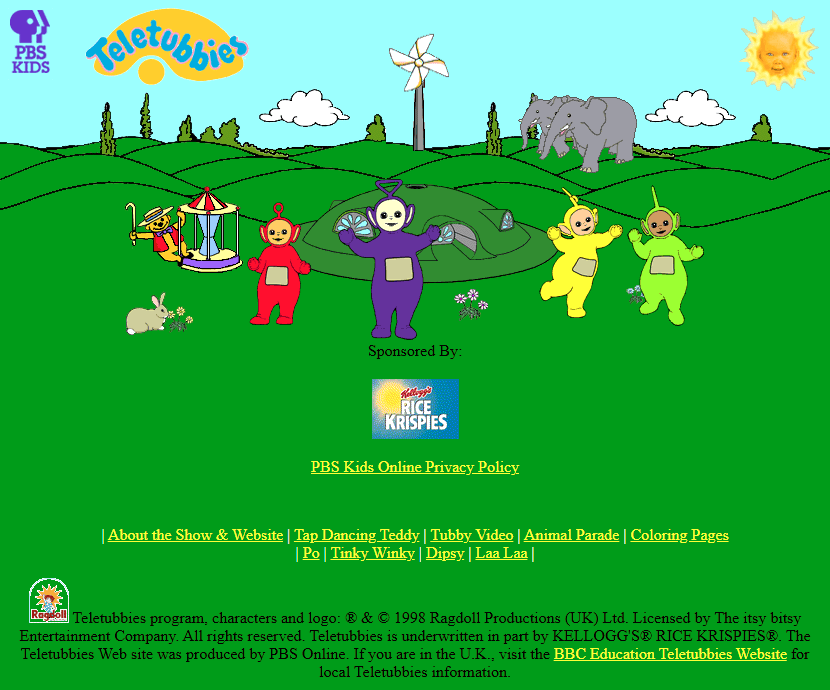
this is a great interview but I must confess that what really stayed with me it the amazing Teletubbies website!
Hola , Architecture In Tokyo Es Otro De Los Clásicos Del Vaporwave. Gracias Al Sello Discografico Business Casual , Muchos Jóvenes Empezaron A Labrar Una Gran Carrera Musical. Un Saludo.