
The Early History of Vaporwave (2009-2014)
The roots of a sonically diverse electronic music genre and art movement

“Global capitalism is nearly there. At the end of the world there will only be liquid advertisement and gaseous desire. Sublimated from our bodies, our untethered senses will endlessly ride escalators through pristine artificial environments, more and less than human, drugged-up and drugged down, catalysed, consuming and consumed by a relentlessly rich economy of sensory information, valued by the pixel. The Virtual Plaza welcomes you, and you will welcome it too.”
I. Proto-Vaporwave (2009-2010)
Try to come up with a snappy definition for vaporwave, and you will fail.
In his 2016 book Babbling Corpse – Vaporwave and The Commodification of Ghosts, the academic author Grafton Tanner recounts how he tried to introduce people to vaporwave, but failed at every attempt to describe its sound and his emotions listening to it: “That is, until I actually played a vaporwave song for them, and then they understood.”
A sonically diverse electronic music genre and art movement that resists easy analysis, vaporwave was born on the internet in the early 2010s.
The first decade of the new millennium had brought with it the vague feeling that Western consumer capitalism might have surpassed its tipping point, so the music looked to past eras for inspiration, to a time before 9/11 and the global financial crisis, before constant accessibility and corporate surveillance – read: the 1980s and 1990s. More specifically, these decades’ aesthetic signifiers and how they communicated naive, optimistic hopes for a better future through technology.
It felt as if the ghosts of those failed hopes were still haunting us, and vaporwave artists channeled those ghosts by sampling pieces of what was perceived as musical rubbish: Elevator muzak, TV commercials, corporate stock music, smooth jazz, bubblegum pop, middle-of-the-road soft rock.
A common misunderstanding is that vaporwave is some sort of trolling joke by a bunch of cynical internet kids, the musical equivalent of a meme or a snarky comment. This interpretation falls short though. For Grafton Tanner, the music “engages in an act of reframing, not necessarily to parody.” It can feel humorous and satirical, but also deeply melancholic and sad. In its best moments, vaporwave manages to transform seemingly worthless sonic material into emotionally resonant art – a process of upcycling.
In the past decade, much has been written about how early vaporwave was a form of ‘internet punk’, a contemporary anti-capitalist art movement that not just emblematized what consumerism did to our places and spaces, but also challenged gender norms and stereotypes as well as celebrity worship culture. I still believe that’s true.
Critique of that view came from the vaporwave scene and producers themselves, some of which maintained that their agenda was never political and their music not designed to deliver any type of social commentary. This argument is besides the point though. The artist’s intentions are just one – and often not a very fertile – means of the interpretation of art. Many artists don’t know why they do what they do, but that shouldn’t hold the audience back from reading meaning into their work.
Vaporwave artists have always struggled with the idea of the commodification of art in the name of profit. Whether by choice or necessity, they rejected the entertainment industry complex with its promotion and marketing cycles, often distributing their music for free under anonymous alias names. Responding to these guerilla tactics, the mainstream music industry and media have been largely ignoring and/or even ridiculing them.
In its beginnings, vaporwave was a subversive DIY grassroots community, an underground resistance of the internet age. Vaporwave has been called the “end of music”, but it was just calling for an end of treating music purely as a corporate product.
In late capitalism, alternative ideas and critical voices are either commodified – and therefore absorbed – or forced into a fringe existence. The same thing happened to vaporwave in the last 15 years. While parts of it have been co-opted by the mainstream, others have been continuing in the original spirit of the movement but also paying the price for it – operating in the shadows and margins, largely removed from public view.
From Hauntology to H-Pop
Back in the early 2010s, a small online scene of music-obsessed kids started experimenting with techniques that academic types would call ‘plunderphonics’.
That’s just a fancy term for sampling and editing parts of existing music, originally coined for the collage works of composer John Oswald. These kids didn’t care much about Oswald, but were influenced by developments in electronic music in the years leading up to 2011, which is when their underground movement finally got an official name and was christened ‘vaporwave’.
What these kids were predominantly listening to and influenced by was this primordial soup of synth- and sample-based music with a similarly haunting, nostalgic quality that was shaping up in the second half of the 2000s.
This new music was distributed through independent labels and internet blogs, as well as an evolving landscape of smaller websites, messageboards and early social media – think a mix of MySpace or Soundcloud loosies and ZIP archives uploaded to MediaFire, posted in the comment section of The Hipster Runoff.
Just a couple of years into the new millennium, on the eve of the smartphone revolution, artists started referencing the naive futuristic aesthetics of the 1980s and 1990s. British music theorists Mark Fisher and Simon Reynolds appropriated the term hauntology – a term originally coined by French philosopher Jacques Derrida for an “artistic mode of realizing [the] failure of the future that was promised in the past” (Grafton Tanner) – to denote a strand of UK electronic music evoking cultural memories of the 20th century, in which the past haunts the present.
Artists mentioned in this context were the electronica duo Boards of Canada, the post-rock band Broadcast, as well as the producers Burial and James Leyland Kirby alias The Caretaker. Throughout the 2000s, they all made use of nostalgic elements in their music through vintage, analog production values, the inclusion of vinyl crackle and tape hiss, and quotes of older styles of music through samples and references. These are the progenitors of vaporwave.
While hauntology focused on British electronica, the writer David Keenan came up with a related term in a 2009 issue of The Wire magazine: He called the lo-fi psychedelic music of loosely connected American musicians such as Ariel Pink and James Ferraro hypnagogic pop (or H-Pop). The term wasn’t well-received at first, but it stuck.
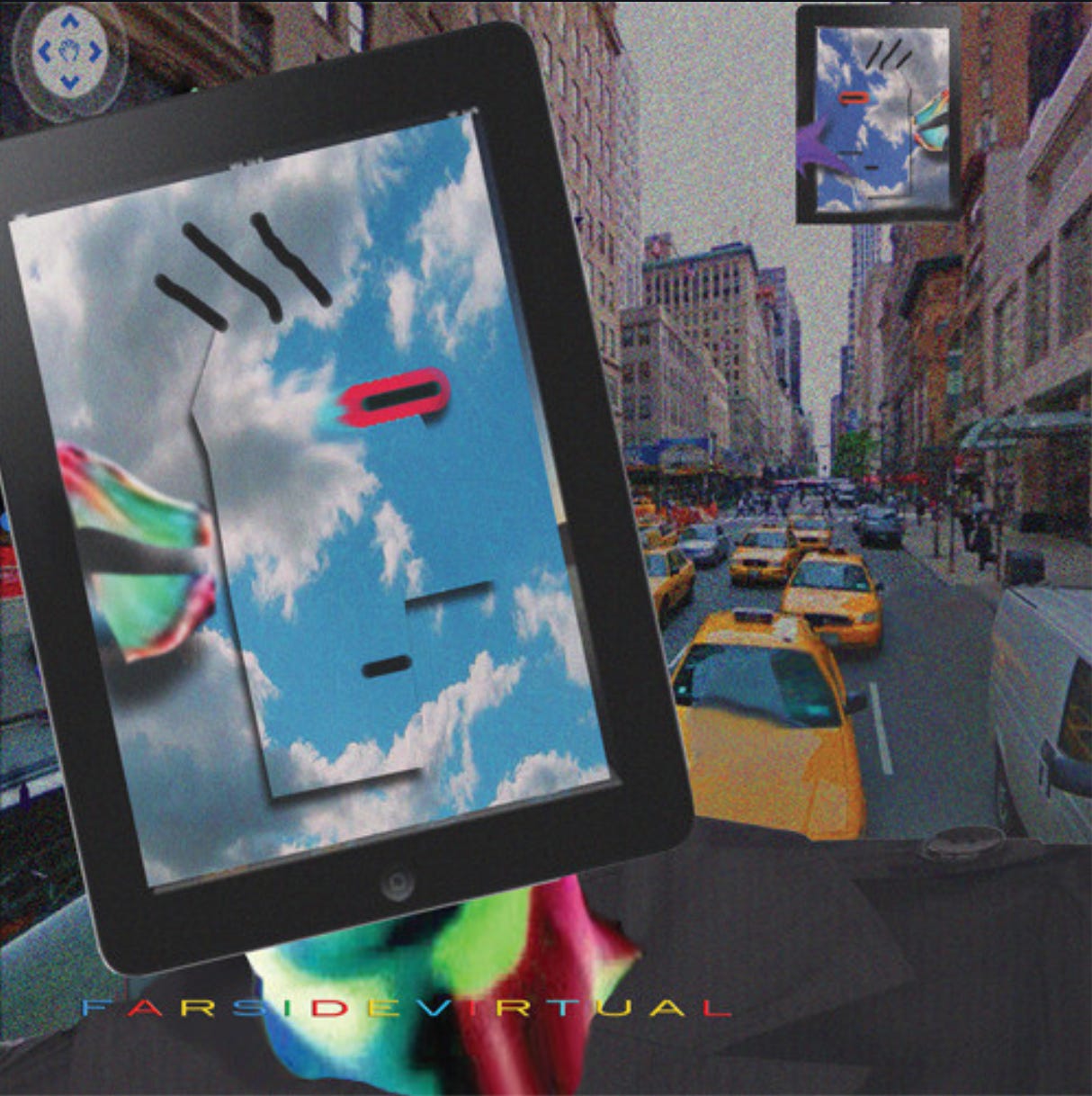
I don’t want to spend any time on Pink here, as he’s become irrelevant in my world and had no big impact on vaporwave, but James Ferraro’s can’t be overstated. Not even his work as part of noise/drone duo The Skaters, but his later solo material, especially his 2010 H-Pop album Night Dolls With Hairspray and the controversial 2011 follow-up Far Side Virtual, which reinterpreted muzak, corporate stock music and commercial ringtones in its kitschy, MIDI-heavy sound. Initially misunderstood as ironic by some critics, the brilliant piece fell on fertile ground in the early vaporwave community.
“That mixture of dread, nostalgia, and transcendence I feel while listening to […] Far Side Virtual is akin to horrific awe or, to borrow a Lovecraftian term, cosmic horror – a horror of the ‘outside’,” Grafton Tanner writes in Babbling Corpse.
Back in 2009, other new movements besides H-Pop started to dominate music blogs: For example the starry-eyed, nostalgic sound of electronic-leaning indie songwriters such as Toro Y Moi and Neon Indian, which would soon be dubbed chillwave. Washed Out’s smash “Feel It All Around”, based on a loop from a 1983 Italo disco tune by Gary Low, became the blueprint for this rising microgenre.
In the same year, Australian-American songwriter and producer Sam Mehran released a seminal album under the alias Matrix Metals, Flamingo Breeze. With its focus on VHS-warped loops of old disco records, it evokes the spirit of the French Touch era, reimagined as home listening music through the vaporous lens of memory.
On the other side of the mood spectrum, witch house was a term to describe the music of Michigan band Salem and a handful of other producers – a dark hybrid of electronica and Southern hip-hop, all slowed-down trap beats, eerie synths and garbled voices that some early vaporwave producers reportedly enjoyed.
From hauntology to hypnagogic pop, from chillwave to witch house – while highly diverse in their individual characteristics, these new microgenres were undoubtedly instrumental in the development of vaporwave, and the pioneers of the scene have confirmed all of them as influential to varying degrees.
18 Carat Affair
Kansas-raised musician and producer Denys Parker, who records as 18 Carat Affair, is often identified as a vaporwave forerunner but rarely given the full credit he deserves.
Parker always remained a reclusive, mysterious figure, a prolific DIY musician working completely outside of the commercial entertainment industry. A studied jazz composer, he’d been making music for some years when the new genre emerged; his first releases go back to 2008, but he’s also released a compilation of chillwave recordings called Spent Passions 2005–2009, so some of his earliest tunes in this style go way back.
In this rare interview with Parker, he’s talking about some of his early influences, from David Lynch to DJ Screw, from Brian Eno to Boards of Canada. He’s also namedropping composers like LaMonte Young and Terry Riley, and citing the Panda Bear album Person Pitch, released in 2007, as a key influence for his proto-vaporwave experiments. In an earlier interview, he’d said he mostly keeps his ears in the past, listening to 1980s disco, house, boogie, funk and soul.
His first release, the EP Cassette Fantasy, came out in June 2008. It’s a collection of 11 short tracks, really just a bunch of lo-fi synth and drum machine loops, mostly under a minute long. In early 2009, he followed it up with another short EP called N. Cruise Blvd and then a 25-minute mini-album, 60/40. Quite similar to the Matrix Metals album from the same year, it presented raw, funky disco loops that sounded as if they’d been copied from tape to tape a hundred times.
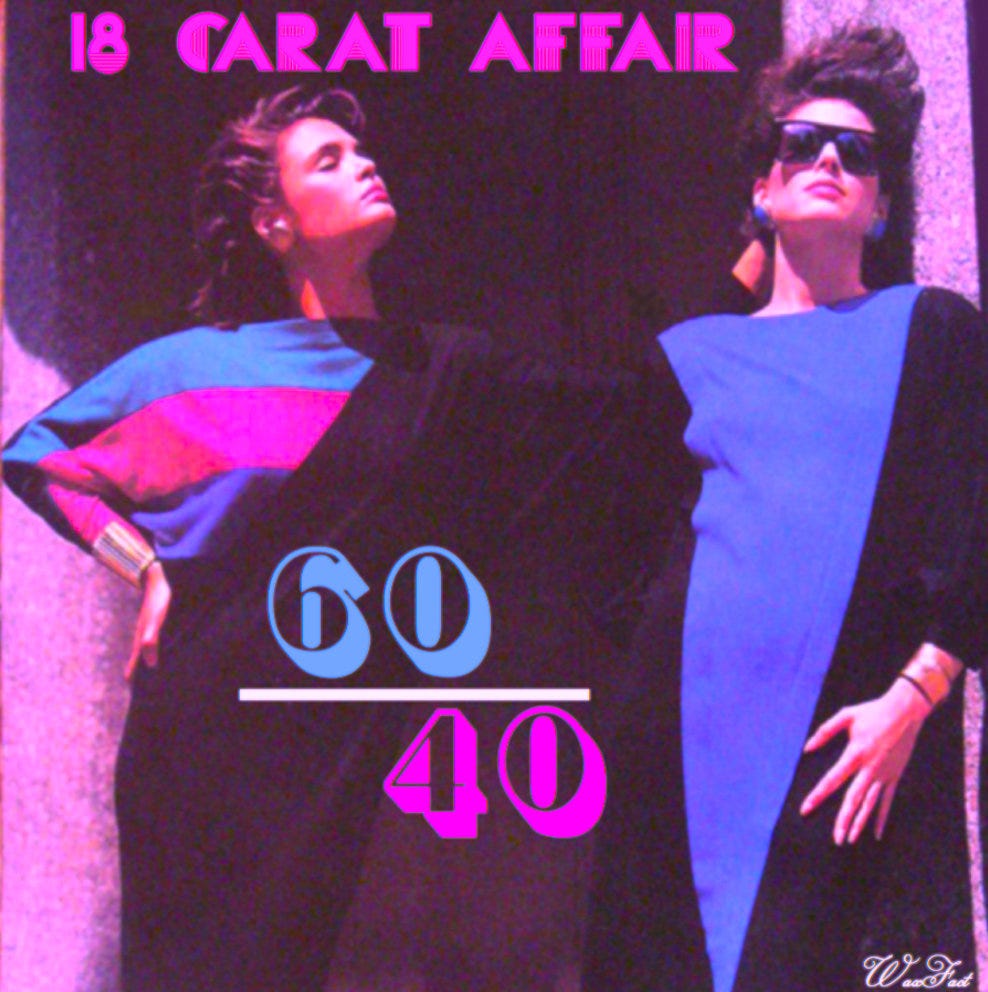
Let that sink in briefly. We’re talking about the year 2009 – this is a year and a half before Daniel Lopatin’s Eccojams and two and a half years before Ramona Langley’s Floral Shoppe would come out – the two albums that are widely seen as the first ‘actual’ vaporwave releases. Again, this was long before the vaporwave term was even coined.
Those early 18 Carat Affair records clearly anticipate some of the genre’s core elements in terms of both the music and the visuals though. They featured 1980s-themed covers and a playful, grainy lo-fi sound based on drum machine grooves and vintage synthesizers. Some of Parker’s music was based on samples, but a lot of it was recorded on hardware; he preferred recording directly to tape, so his tracks became momentary snapshots that couldn’t be altered or mixed afterwards.
Parker went on to produce an impressive independent catalogue. His 2011 album Vintage Romance was one of the most accomplished statements of early vaporwave with a strong chillwave influence. His music would find a wider audience through its frequent use in skateboarding videos, particularly the edits by the Bronze 56k crew. His last (frankly, excellent) album, Body Double, came out in 2022.
In my mind there’s no doubt that Denys Parker must be regarded as an early pioneer of (proto-)vaporwave and chillwave, one who’s paved the way for so many other artists while carving out his very own, idiosyncratic route.
Oneohtrix Point Never
At its core, vaporwave is a form of experimental electronic music.
But it wouldn’t exist without a visionary hip-hop DJ from Houston: In the early 1990s, the late DJ Screw invented a technique of slowing down and adding reverb effects to his records – his chopped & screwed mixtapes were an inspiration and a precursor to Daniel Lopatin’s Eccojams.
Lopatin would become the single most impactful figure of the proto-vaporwave era – he’s the producer that basically created the methodical and sonic foundations the new genre was built upon.
In July 2009, Lopatin launched the Youtube channel sunsetcorp, where he’d upload a bunch of new experimental pieces he called eccojams. For these remixes, he applied DJ Screw’s techniques to cheesy 1980s dance pop, smooth jazz and yacht rock songs, essentially slowing these tunes down heavily and adding echo and pitch-shifting effects.
Lopatin would add his own video art to these jams, editing together footage from old music videos, commercials, ads and animated films. These works would eventually be compiled on the audiovisual project Memory Vague (August 2009), a foundational document of the vaporwave scene.
In the months after, Lopatin reconnected with his friend Joel Ford, with whom he had played in high school bands together, back in Boston where they grew up. After graduation, Ford had moved to New York and become part of the indie pop group Tigercity, while Lopatin had started making experimental synth music as Oneohtrix Point Never. In early 2010, they began writing together for a mutual synth pop project called Games – a name they’d soon have to abandon due to legal issues. From then on, they just went by Lopatin & Ford.
Between February and April, they’d release a series of three mixtapes called Heaven Can Wait, which contained slowed-down edits of 1980s dance pop, Italo disco and soft rock songs – music that was deemed cheesy and tasteless at the time, but that carried a deeply melancholic, emotional core for listeners who remembered them vaguely from their childhood and adolescence.
In July, Games would unleash the two-hour mixtape Spent The Night With… in a run of 100 double cassettes through The Curatorial Club, a tape label connected to the music blog Chocolate Bobka. Here they applied the plunderphonics template to all kinds of music they liked, not just pop and disco, but 1990s hip-hop and trip-hop too, and even early Chicago house and Detroit techno.
There would be two more Games releases that year – the instrumental, glitchy single “Everything is Working” and the more fully-formed EP “That We Can Play”. The latter included a bunch of sparkling original synth pop tunes including the underground hit “Strawberry Skies” (with vocals by a young Laurel Halo).
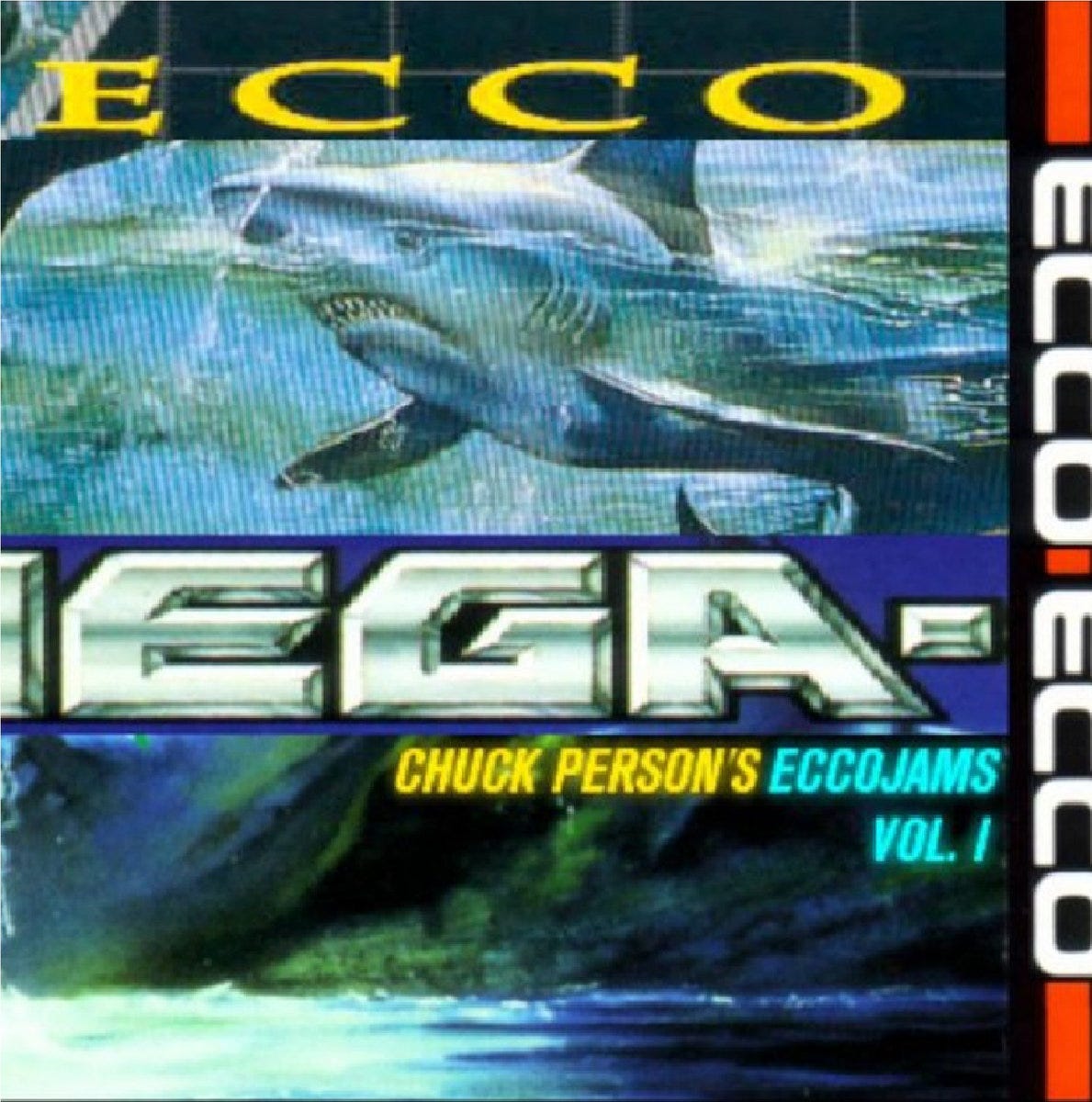
That summer, Lopatin would compile some of the sunsetcorp edits, add some new pieces in that style and release the package as the proto-vaporwave classic mixtape Chuck Person’s Eccojams Vol. 1 on The Curatorial Club in a run of 100 cassettes. The source material went from Janet Jackson to Kate Bush, from 2pac to ELO, and from Toto’s 1982 yacht rock classic “Africa” to Chris de Burgh’s 1986 power pop ballad “Lady in Red”.
When Eccojams came out in August 2010, the term ‘vaporwave’ hadn’t even been coined yet (that would happen sometime in the following year). But without this mixtape, the genre clearly wouldn’t exist today. Through Lopatin’s treatments, these old songs developed a new quality, one that felt strangely familiar and unsettlingly uncanny at the same time.
By the time that some of the very early pioneers like Ramona Langley (alias Vektroid) and Robin Barnett (alias Internet Club) ran off with that template, Lopatin had already moved on from the idea. Like James Ferraro, he didn’t see himself as part of any scene and was significantly older than most of the first generation vaporwave producers.
In 2011, he would release an album of original indie pop with Joel Ford called Channel Pressure, which was followed by the still plunderphonics-influenced, but much more through-composed OPN album Replica. Neither Lopatin nor Ford would ever revisit the musical style of the genre they helped launch, but their foundational role remains unquestioned.
Skeleton 骷
We’re still a couple of months ahead of the actual formation of the vaporwave scene.
In September 2010, a month after Eccojams, an anonymous MySpace page started releasing ten sample-based tracks credited to the moniker 失われた記憶 (‘Lost Memory’) in quick succession over a couple of weeks.
That same account would release two full albums back-to-back in October and November: Skeleton and Holograms. Both seemed to be the work of the same anonymous producer, who now went by the name 骨架的 (‘Skeleton’; they would later change their moniker to a more accurate Japanese translation, 骷).
To this day, nobody seems to know who was behind those artist monikers. Aside from that they’re apparently hailing from Queens, New York, not much is known about their identity and biography. But Skeleton is now widely considered “one of the first abstract hints towards the creation of the vaporwave genre”, while Holograms “would later be a major inspiration for the 2011 output of Computer Dreams, Vektroid and Internet Club.” (vaporwave.wiki)
What’s interesting to note if you listen to these two albums today is how different they sound, even if they were released just a month apart. I have no idea how the mysterious producer came up with this kind of music at that point in time. It seems likely that we’ll never find out, at least not directly from them.
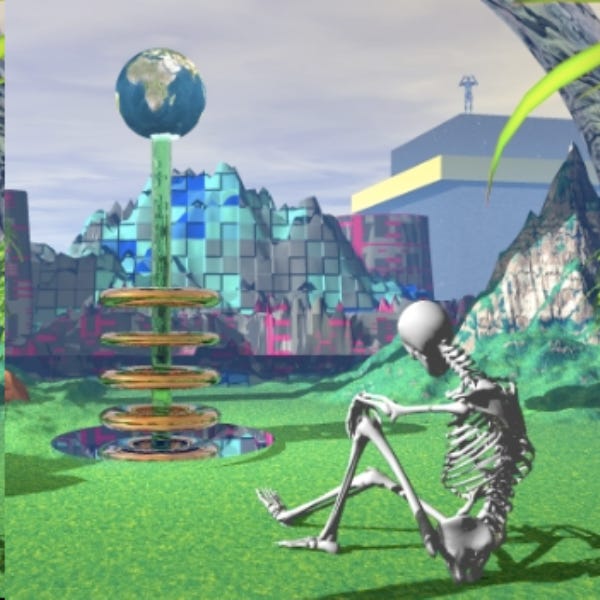
From today’s vantage point, Skeleton sounds more like a dark, unsettling ambient album created from obscure samples; Holograms was possibly even more impactful for the emerging vaporwave scene, as it sounds brighter and more playful in its appreciation of the tropes of late 20th century commercial music, therefore feeling more closely related to the proto-vaporwave of Daniel Lopatin and James Ferraro.
The anonymous producer went on to release more music throughout the 2010s, but followed a quite erratic release schedule that often included deleting albums a few months after release and reuploading versions with alternate tracklistings and covers. In 2024, their catalogue was completely removed from Bandcamp and streaming services. The reason remains unclear.
Essential Listening: Proto-Vaporwave (2009-2010)
18 Carat Affair – 60/40 (EP, 02/2009)
Oneohtrix Point Never – Memory Vague (DVD, 08/2009)
Oneohtrix Point Never – Zones Without People (LP, 08/2009)
Matrix Metals – Flamingo Breeze (LP, summer 2009)
Games – Spend The Night With… (mixtape, 07/2010)
Chuck Person’s Eccojams Vol. 1 (mixtape, 08/2010)
Skeleton 骷 – Skeleton (LP, 10/2010)
Skeleton 骷 – Holograms (LP, 11/2010)
18 Carat Affair – Vintage Romance (LP, 07/2011)
James Ferraro – Far Side Virtual (LP, 10/2011)
II. The Birth of Vaporwave (2011-2012)
While Daniel Lopatin’s ‘eccojams’ were based on slowed down loops from bubblegum pop and smooth jazz songs, heavily treated with effects, James Ferraro wrote original music based on the tropes of virtual media and corporate stock music. Lopatin stood in the tradition of John Oswald’s plunderphonics and DJ Screw’s chopped-and-screwed techniques. Ferraro came from the DIY drone, noise and lo-fi scene. Both appropriated the naive and promising futuristic sounds of the early age of personal computing in the 1980s and 1990s.
Vaporwave was the fusion of those two ideas by a bunch of creative internet kids who were also into Japanese pop culture and post-Marxist theory. They connected over online forums and early social media platforms, where they shared self-produced electronic music and collages of early computer graphics, anime and VHS video art. This intersection is where vaporwave was born.
“The vaporwave community was a kind of internet underground with a DIY ethos”, Grafton Tanner notes in Babbling Corpse. “Monikers obscured authorial intent. How many producers were there really? Or was one person behind them all? Perhaps no humans were involved. Perhaps vaporwave was just the sound of the internet singing back to us.”
Vaporwave’s early producers often hid behind anonymous monikers, making it the first placeless and – largely – faceless music scene. In Michael Brown’s brilliant 2025 book on the 2015 vaporwave classic BUY NOW by Eyeliner, the introverted New Zealand-based producer Luke Rowell (alias Eyeliner) is quoted: “I spent a bit of time in my youth being afraid of school, afraid of the world. Just being in my bedroom with a computer was incredibly comforting.”
Most producers of that first (vapor)wave were still teenagers. Their ambition was not to make a career in music, but to make cool stuff to share with their friends. Being shut out from the traditional entertainment industry due to a lack of access and the legal restrictions of copyright law, they embraced new methods of distribution.
Building their tracks on cracked software, they spread their albums as ZIP files through internet blogs, forum sites and early social media such as MySpace, Tumblr – and, most notably, Turntable.fm. This rather short-lived platform launched in May 2011, allowing users to create live chatrooms. Some of the scene’s most influential producers would meet there regularly to upload and play music for each other, with everyone commenting in real time.
The original circle on Turntable.fm reportedly included Ramona Langley (Vektroid, Laserdisc Visions), Robin Burnett (Internet Club), Leonce Nelson (Geotherm), Jonathan Dean (Transmuteo), Ryan Hroch (Veracom), Joshuah Miller (Infinity Frequencies), Luxury Elite and others; not all of them made vaporwave, some were just into weird experimental electronic, lo-fi or drone music.
Part of that community were also Liz Yordy (DJ Alina) and Chaz Allen (Metallic Ghosts), two underage kids from North Carolina and Illinois respectively, who started curating livestreams under the name SPF420. Those gatherings, which they’d later move to the platform TinyChat, would become foundational to the scene. “We would all hang out and listen to whatever”, Liz said in a 2014 interview. “Lil B, Salem sped up 33%, sometimes our own tracks.”
The term ‘vaporwave’ first appeared in blogposts in the autumn of 2011, mostly used as a satiric half-joke, kind of a riff on all those new internet music genres and hashtags. In a Chicago Reader piece from early 2013, Veracom is quoted saying it’s “an ugly overused tag based on somebody’s ironic sense of humor that never should have been taken seriously.”
Its popularization in media is generally credited to the article “Vaporwave and the Pop-Art of the Virtual Plaza” by Adam Harper, published by Dummy magazine in July 2012. In that article, Harper explains in a mix of excitement and bewilderment:
“The typical vaporwave track is a wholly synthesised or heavily processed chunk of corporate mood music, bright and earnest or slow and sultry, often beautiful, either looped out of sync and beyond the point of functionality or standing alone, and sometimes with a smattering of miasma about it. It’s made by mysterious and often nameless entities that lurk the internet, often behind a pseudo-corporate name or web façade, and whose music is typically free to download through Mediafire, Last FM, Soundcloud or Bandcamp. Occasionally vaporwave produces a material object, a cassette or CD-R decorated with internet-age and hi-fi-era pop art that both sickens and astonishes. The text surrounding vaporwave – the artist names and track titles – is almost entirely in declamatory, brutally attention-craving capital letters, and often employs Chinese and Japanese lettering whose inscrutably (to me and most other Westerners, at least) enhances the music’s sense of tapping into the airwaves of global techno-capitalism and overhearing its business as usual, meant for someone else.”
The Dummy piece was heavily criticized from the scene for being reductive and/or pretentious. But its importance for the classification and popularization of the movement can’t be denied.
Ramona Andra Langley (Vektroid)
If Lopatin and Ferraro (and, to a certain degree, 18 Carat Affair and Skeleton) are the godfathers of vaporwave, then Ramona Langley is the movement’s first legitimate pioneer.
Hailing from Washington State, she’d been releasing experimental electronic music under the name Vektordrum since 2008. A trans woman on the autism spectrum, she’s previously spoken about growing up with an absent father who worked in Silicon Valley and therefore spending the majority of her youth on the internet.
In 2010, Langley was 18 years old and living in Portland, Oregon. The EP Telnet Erotika was her first release as Vektroid, released on 22 November 2010. It still falls into the proto-vaporwave realm, as the music was definitely influenced by sunsetcorp and Eccojams, but Langley did more than just slow down, edit and add some reverb filters – she was already stacking layers of original synths and programmed drums influenced by hip-hop, trap and EDM, basically delivering a blueprint for the entire subgenre of vaportrap. It’s definitely one of the most visionary releases from that era, and many other producers from that first vaporwave generation have talked about its massive impact.
Langley later deleted the original Telnet Erotika from her sites. The 2017 album version that is currently available as Telnet Complete is differing a lot from the 2010 EP. It has 12 more tracks, and the original five were edited, reworked and remastered. While Complete is surely an interesting project in itself, I recommend listening to the first version of Erotika in this context to truly understand its trajectory.
A couple of months later, in March 2011, Langley released the mixtape Virtual Casino under her alias Laserdisc Visions; the Kansas-based independent label Beer On The Rug re-packaged and re-released it in July as New Dreams Ltd.
Langley herself has likened the sample-heavy project to “a caricature of mass media and its evolution in the late ‘80s right before computer culture blew up in America” (quoted in Adam Harper’s Dummy article, which is only accessible through the Wayback Machine). Even more than Telnet Erotika, this collection of uncanny easy listening vignettes would influence the rest of the early vaporwave scene.
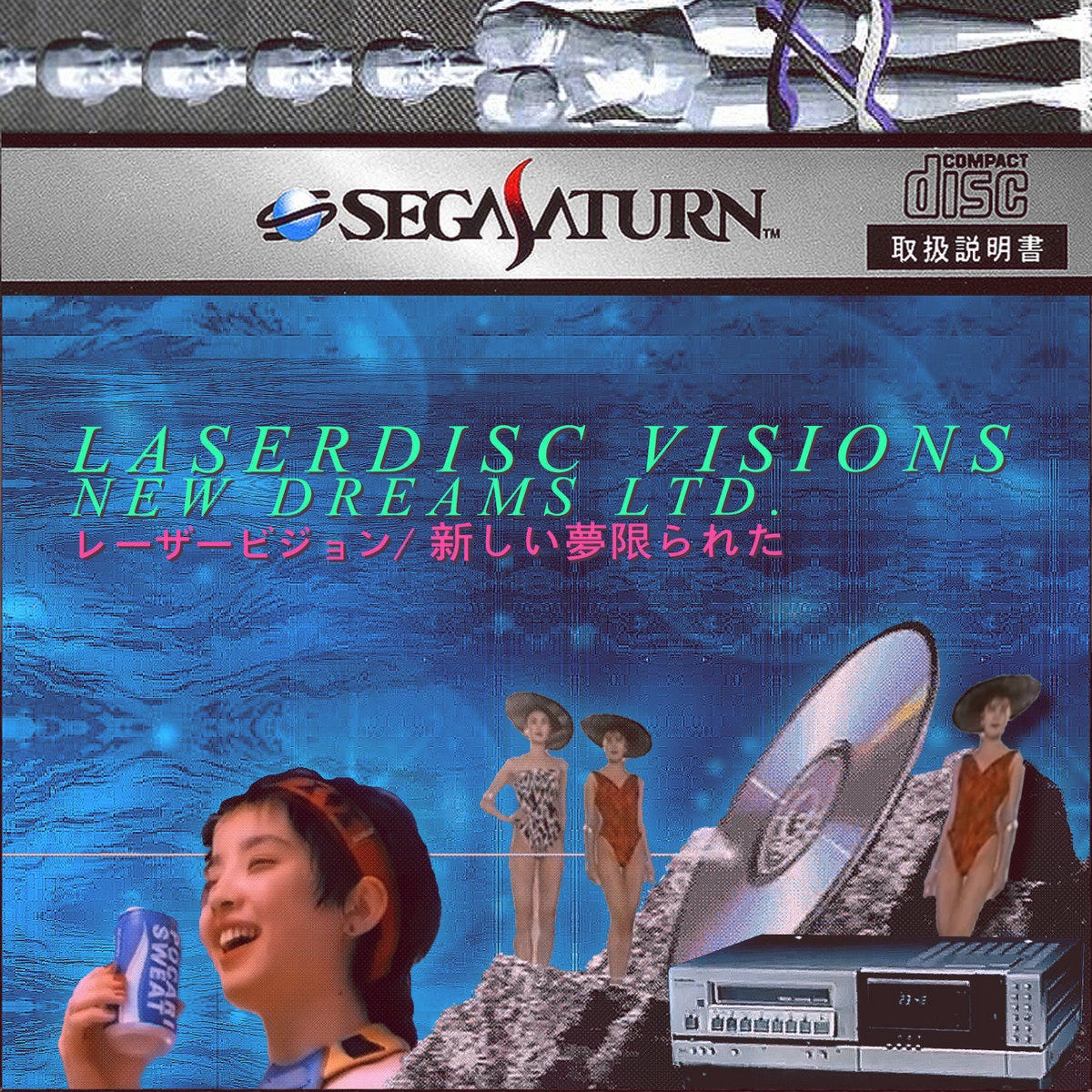
After associating herself with the original Turntable.fm crew in the summer of 2011, she’d release five more vaporwave-leaning projects in the second half of the year – credited to various monikers like fuji grid TV, New Dreams Ltd., esc 不在, Tanning Salon and Macintosh Plus. Some of them were deleted and re-released later with different mixes, tracklists and artworks.
It was the last one in that influential string of releases, the seminal Floral Shoppe, that would turn into the most prominent example of the genre when it became a semi-popular internet trend in 2012. It also contains the most streamed vaporwave track of all time, essentially a slowed down loop of the intro of a 1984 Diana Ross track.
“Floral Shoppe nailed the feeling of in-betweenness: between waking and sleeping, between male and female, between nostalgia and abject horror”, Grafton Tanner writes in Babbling Corpses. Langley was the first to assemble all elements of the burgeoning genre – musically as well as visually – and package them into an accessible work of art that may not have quite reached mainstream-level success, but at least familiarized vaporwave with many new listeners.
Interviewed by Adam Harper in 2012, Langley rejected the vaporwave category (“I don’t affiliate with it personally”), but agreed New Dreams Ltd. might fall under it. She referred to her online circle of friends as largely unconcerned about vaporwave being an actual genre: “Screw music has been around for ages now – we’ve just changed the context we see it within and the means by which we conceive it.”
During 2012, Langley would go on to release another handful of foundational vaporwave projects under aliases such as 情報デスクVIRTUAL, Sacred Tapestry and PrismCorp Virtual Enterprises. In 2013, she’d drop out of the scene. At this point, she’d shaped the young genre so profoundly that it basically became synonymous with her work for many listeners. In the infamous “Vaporwave Essentials” graphics that have been floating around online forums, she even got her own category, right between “proto-vapor” (Lopatin, Ferraro, Skeleton) and “classic style” (most of the producers below).
Though Langley never returned to this style of music, she has remixed and re-released many of her original albums from the 2011–2013 era. In recent years, she’s apparently moved back to Washington State, where she’s still active as an independent electronic music producer and graphic designer; her Bandcamp page has been saying for a while that she’s working on a new MacPlus album. Her last release under that alias dates back to 2019.
Robin Burnett (Internet Club)
In an extensive 2024 interview with music journalist Nick Caceres, Robin Burnett from Dallas, Texas, recalls that they were still in high school when the movement kicked off. They launched their Datavis project at age 15, recording on hardware in their bedroom: “It was just these lumbering drones and cheap keyboard drum machines looping around and making dusty, droning, rhythmic, weird shit.”
They’d move on to software soon, processing samples ripped from YouTube to endearing effect. Their first pre-vapor release, the EP Fading, came out in October 2010 (the same month as Langley’s Telnet Erotika). Around that time, Burnett befriended Leonce Nelson, a teenager from New Orleans who lived in Atlanta, on social media. The duo shared musical interests and started exchanging files online, adding to each others’ experiments – a practice that eventually morphed into a collaborative project called DataVision Ltd.; their first release, the EP Vector Tables, came out on January 1, 2011.
The music on Vector Tables is a mix of glitchy, screwed up lo-fi loops of ad snippets and other weird sounds. “I think we were just really heavily inspired by that time period when chillwave was over, whatever that meant”, Burnett says. “It seemed like there was another wave with a new microgenre every five seconds. Before vaporwave became a term, you just got lots of bullshit that either I came up with or other people came up with.”
Asked about their main musical influences at the time, Burnett names the usual godfathers such as Ford & Lopatin, Ferraro’s New Age Tapes label and Vektroid’s Telnet Erotika, but also the late L.A. based producer Napolian, Sam Mehran’s Outer Limits Recordings and weird noise acts like the French duo Natural Snow Buildings, which they’d discover through internet blogs like Altered Zones.
Altered Zones was “a 2010-11 spinoff of web magazine Pitchfork that aggregated blog posts from other sites”, as Michael Brown states. “There was music distribution and criticism, review, the Net Art scene on Tumblr, early computer graphics, VHS rips, GIFs”, Luke Rowell alias Eyeliner recalls in Brown’s aforementioned book.
Burnett and Nelson would soon join Turntable.fm and become the center of the early vaporwave group. Burnett created a new solo alias for musical experiments to play on these livestreams: Internet Club. They dropped their first full-length project in June 2011 on their private Tumblr page, an album called Modern Business Collection, which started off with the programmatically titled tune “Lonely Internet Nights”.
While Nelson moved away from vaporwave rather quickly, Burnett released an album per month for the rest of the year, most of them under the Internet Club moniker: “I just had so many ideas. Every album was just me trying to dig in and screw around with a concept. Deluxe was my first look into Japanese TV commercials and that was definitely influenced by Vektroid and her look into that. Beyond the Zone was somewhere between like Heisei-era Japan during the ‘90s and ‘00s, crossed with that early optimized business.”
Being 15 or 16 at the time, Burnett was already exploring a wide range of references from Japanese anime to stock music, from Wong Kar-Wai films to Hong Kong hip-hop, sourcing their samples from the internet. In the interview, they’re calling that moment in late 2011 the peak of their “very concretely situationist and marxist plunderphonics phase”. Grafton Tanner applied French philosopher Guy Débord’s idea of détournement to early vaporwave like that of Langley and Burnett, as they gave that 1980s hypercapitalist aesthetic a completely new meaning.
Burnett kept going at this pace in 2012, releasing album after album and creating another alias, Ecco Unlimited, to explore sample-based longform drone music. Similar to Ramona Langley, Burnett came to an end of their vaporwave phase around early 2013, a period they’re referring to as “the depression era”.
After releasing some more music under other aliases like memorex dawn, monument XIII and SunCoast Web Series, their main artist identity became Wakesleep – a project influenced by contemporary composition and musique concrète, utilizing both samples and original music, moving away from the semi-ironic stance of vaporwave. Burnett would not return to making music in that style for a very long time. Only in the last few years they appeared at a bunch of festivals and sporadically released some new material as Internet Club.
Computer Dreams
One of Burnett’s main influences on their earliest Internet Club releases was an anonymous producer from Houston, Texas, going by the moniker Computer Dreams, who also made vaporwave before that term even existed. Their Midnight Television EP and the self-titled Computer Dreams album consist of hypnotizing lo-fi loops resembling 1980s TV background themes. These came out in May/June 2011 on Beer On The Rug, the same label that would release Ramona Langley’s first Laserdisc Visions album and Floral Shoppe later in the year.
Labels weren’t an important part of the vaporwave scene, though Beer On The Rug has to be credited as it gave the music some wider exposure in experimental electronic circles. Artist-run labels such as Fortune 500 or Business Casual would follow in its footsteps, signposting the relevant releases in a sea of proto-slop that vaporwave would soon produce.
Computer Dreams followed these early, formative projects up in August 2011 with a split record with synth wizard Napolian, then released Silk Road in September and the untitled EP in November, before vanishing from the scene. They’d eventually reappear in 2013 as Computer Slime, and revive the Computer Dreams moniker in 2018, but their new music now fell into the juke/footwork genre.
Two other, highly influential producers in those early days were Eric McGuigan (alias Lasership Stereo / Diskette Romances) and Joshuah Miller (alias Infinity Frequencies / Local News). McGuigan’s first EPs as Lasership Stereo appeared in September/October 2011 – which makes him one of the earliest proponents of the genre right after Langley, Burnett and Computer Dreams. One of his most influential releases, the Diskette Romances EP, came out in June 2012.
Miller debuted as Infinity Frequencies with his Euphoria project in July 2012. While that one still features classic 1980s eccojams, he’d soon develop a new style that he’d perfect on his lauded Computer Trilogy in 2013 – short instrumental, usually drumless vignettes that evoked the uncanniness of so-called ‘liminal spaces’ such as empty malls, museums or hotel room floors. As Local News, he’d become the first producer to make what would later be dubbed signalwave or broken transmission, a subset of vaporwave created from old radio jingles and TV broadcast samples.
In the second half of 2012, a bunch of new players and producers arrived on the scene, bringing with them their own influences and creating what would evolve into several subgenres of vaporwave.
Inspired by the music of Computer Dreams and James Ferraro, Luke Rowell alias Eyeliner from New Zealand released his first vaporwave album High Fashion Mood Music in July 2012. A skilled electronic musician who’d been releasing synth pop music as Disasteradio for a decade, the Eyeliner project didn’t rely too much on sampling but created its very own 1980s-themed throwback style.
Patrick Driscoll alias Blank Banshee released his first album Blank Banshee 0 in September 2012. It’s seen as the founding document of vaportrap, a fusion of vaporwave textures and instrumental beats inspired by trap and cloud rap.
Alexander Matulonis alias Hentasi came out with Vacant Places in the same month, a seminal release of mallsoft, a vaporwave subgenre revolving around Muzak samples, mixed as if played over speakers at an abandoned shopping mall.
Luxury Elite, an anonymous producer who’d been among the earliest Turntable.fm crowd too, started releasing her first projects at the end of the year, outlining her vision of the ‘late nite lo-fi’ subgenre. Her first fully realized album, III, would appear in December, but her best work was yet to come.
The “Death” of Vaporwave
In January 2013, SPF420 hosted an online festival which Chaz Allen called a “final eulogy” for vaporwave. In a Chicago Reader article, he’s quoted: “As soon as you name something, it’s going to take off and die.”
It’s interesting to read that now, because vaporwave hadn’t even reached mainstream-level success at the time. Pop videos by Rihanna and Azealia Banks seemed superficially inspired by the Tumblr visuals of vaporwave and the ‘seapunk’ aesthetic, but only a small audience was aware of the music. It did find some appeal on platforms like Reddit and 4chan. Some music magazines, like Dummy and Tiny Mix Tapes, had written stories about it (while others, like Pitchfork, continued to ignore it), and critic Anthony Fantano had reviewed Macintosh Plus’ Floral Shoppe, almost one year after its release, on his popular YouTube channel The Needle Drop.
Even this little bit of outside attention seemed unwanted though. Allen again: “That Fantano review helped kill vaporwave, helped make it like everyone was doing it now. And 4chan was probably what really killed it, and the Dummy article.”
Considering the history of the scene as an essentially anti-capitalist artform (which is not, as often proclaimed, an overblown interpretation – it’s what pioneers like Langley and Burnett even said themselves about their initial motivations), it’s understandable that artists were afraid of co-optation by the music industry. Some also didn’t want to get boxed in by a loosely defined aesthetic that felt fun for a minute but constraining in the long run, when they experimented in multiple areas of electronic music.
And still, despite all the gatekeeping and infighting which seemed to be inevitable in a scene consisting mostly of teenagers, vaporwave wasn’t dead at all. It had actually just started. Ramona Langley and Robin Burnett would eventually stop making vaporwave, but new producers appeared in their place, inspired by and adding to their legacy, pushing the music into interesting new directions.
Essential Listening: The Birth of Vaporwave (2011-2012)
Vektroid – Telnet Erotika (EP, 11/2010)
Datavision Ltd. – Vector Tables (EP, 01/2011)
Midnight Television – Midnight Television (05/2011)
Computer Dreams – Computer Dreams (06/2011)
Internet Club – Modern Business Collection (06/2011)
Laserdisc Visions – New Dreams Ltd. (07/2011)
18 Carat Affair – Vintage Romance (07/2011)
MediaFired – The Pathway Through Whatever (07/2011)
Macintosh Plus – Floral Shoppe (12/2011)
Diskette Romances – Diskette Romances (06/2012)
Eyeliner – High Fashion Mood Music (07/2012)
Infinity Frequencies – Euphoria (07/2012)
Sacred Tapestry – Shader (08/2012)
Blank Banshee – Blank Banshee 0 (09/2012)
Hantasi – Vacant Places (09/2012)
Miami Vice – Culture Island (12/2012)
Luxury Elite – III (12/2012)
III. The Second Generation (2013-2014)
With vaporwave’s growing popularity, kids around the world started imitating badly what they’d heard on early templates like Eccojams or Floral Shoppe.
The music industry and the fashion world started implementing elements of vaporwave’s visual code as well. From commercial hip-hop videos to runway shows – suddenly the aesthetic was everywhere.
In July 2013, Adam Harper published a follow-up to his infamous Dummy article – the first time that an established music journalist had reflected on the scene. In the sequel, Harper discussed negative reactions from the scene to his previous piece and mentioned a bunch of strong new releases pushing the movement forward, while also rightly pointing out that some labels had started prioritizing quantity over quality, and that too much boring and lazy music was being released.
Some of the original pioneers had already gotten tired of the tropes and the hype. Just as legacy media was finally starting to pay attention to vaporwave, producers like Vektroid and Internet Club stopped making it – and just moved on with their lives and music careers.
Luckily, a bunch of new producers inspired by the first generation appeared at the right moment in time to push the music into exciting new realms, regardless of what happened in the mainstream.
One of them, the UK artist and label founder David Russo alias HKE, would be quoted in a Neonvice interview two years later:
“Despite the fact a lot of contemporary vaporwave is rightfully criticised for its lack of ambition and artistry, I still believe there are a large growing number of artists and labels who are doing really good things, and I think as a result of this the genre is growing more popular all the time.”
Future Funk
One of the main innovations of the second generation was future funk, a subgenre that could be described as a nostalgic reframing of funk, boogie, disco and early house music, using the aesthetic markers of vaporwave.
While the music of most early pioneers had felt rather laid back, serene and sometimes ironic and intellectual, future funk approached the 1980s/1990s nostalgia theme with a more upbeat, fun and straight-forward hedonistic approach.
At the time, dance music was dominated by harsh basslines, massive drops and pounding drums – we’re talking about the peak years of EDM trap and mainstream dubstep. Future funk provided a counterpoint to those commercial styles of dance music – a vintage lo-fi sound with a nostalgic vibe harking back to the melodic filter house of an earlier era.
Future funk producers built tunes from sloppily chopped loops, taking multiple bars of old disco-funk, adding vocal cuts and sound effects. Their guerilla releases were typically packaged in bright, colourful artworks inspired by classic Japanese anime.
The up-and-coming producer Ryan DeRobertis from Long Island, New York, had dabbled in chillwave-adjacent music as a teenager. Between November 2012 and May 2013, he self-released nine albums under his Saint Pepsi moniker, which were highly acclaimed in the scene and laid the foundation for future funk.
The best ones – Studio 54 or Hit Vibes – remain true vaporwave classics. They’re often seen as that early stretch’s crowning achievements, flawless collections of lo-fi disco edits blended with some slowed down 1980s pop and new wave tracks.
DeRobertis had to drop the moniker in 2014 due to an impending cease and desist from the popular soda company. He’s been known as Skylar Spence ever since – a name that harks back to a song title on Hit Vibes – pivoting towards more original songwriting, while remaining indebted to future funk’s sound world.
Other early future funk – like 2013 albums by Childhood or Rollergirl! – tapped into similar nostalgic and colourful territory; the lo-fi hardware jams of 18 Carat Affair were another heavy influence on the new style.
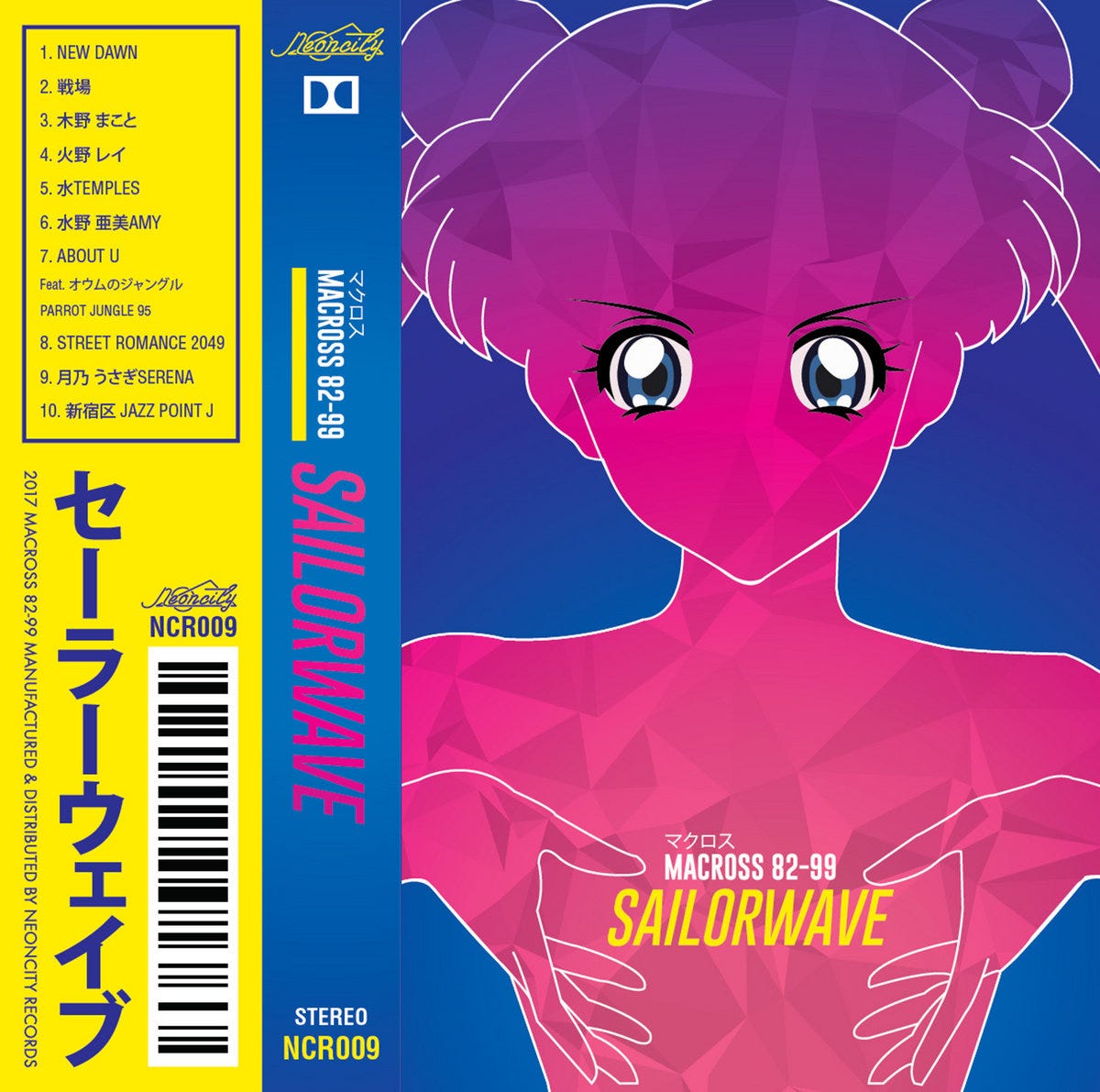
Macross 82-99, a young vaporwave producer from Mexico City, was brought up on Daft Punk, Justice and Japanese anime, especially Sailor Moon (he’d create his own legendary Sailorwave album trilogy over the next decade). Inheriting a love of Japanese culture from his father, he added a new musical influence to the disco and boogie roots of future funk: City pop and J-pop.
Other names like Yung Bae, Mike Tenay, Luis Lancaster, Dan Mason and Flamingosis appeared on the map in those years, turning future funk into an actual subgenre of vaporwave with a growing fanbase – among them a bunch of music fans that weren’t into regular vaporwave at all, but came from other styles of dance music.
There would be some overlap with synthwave, a style of music also called outrun. The retro sound based on 1980s synth pop and soundtrack music achieved a similar popularity boost in the mid-2010s – even until today, some labels and artists serve both the synthwave and the future funk community. The lines, admittedly, were always a bit blurry.

Mallsoft
The mallsoft subgenre was born in late 2012, mainly reflected in the release of two albums, Hantasi’s Vacant Places and Miami Vice’s Culture Island, which evoked the surreal atmosphere of so-called ‘liminal spaces’ – places that should usually be full of human life, but for some reason aren’t (anymore).
In the United States, the concept of the shopping mall had flourished in the 1980s and 1990s but they started emptying around the millennium, when consumers suddenly ordered more and more goods over the internet. The infamous archival site Deadmalls.com, which inspired many vaporwave producers, launched in the year 2000. Widespread wi-fi and the rise of smartphone culture as well as the financial crisis of 2008 notably sped up that trend.
Throughout 2013 and 2014, a bunch of formative mallsoft classics would see the light of day, establishing the style as its own strand in the scene:
In April 2013, Parish Bracha from San Diego released his sole album Hologram Plaza under the alias Disconscious. This work reduced Hantasi’s wider formula to soundtracking a hyperspecific environment – the ‘virtual plaza’.
In March 2014, a Brooklyn-based producer namend groceries (stylized with loads of Japanese Kanji) released the album Yes We’re Open!, which would apply the mallsoft idea to the environment of a megastore.
Jornt Elzinga alias Cat System Corp. from the Netherlands established himself as a producer in the scene through a bunch of releases in late 2013 and early 2014. Both Hiraeth (April 2014) and Palm Mall (October 2014) became prime examples of the mallsoft style. He’d return to this concept throughout his career, most notably on the sequel Palm Mall Mars (2018).
The canon of music sampled for mallsoft was similar to classic vaporwave: slowed and manipulated smooth jazz and 1980s pop, but also easy listening muzak and lounge music like light bossa nova tunes or instrumental covers of pop songs.
Key to mallsoft was the specific style of manipulation of these slowed-down songs by adding loads of reverb and filters to make the music sound as if it’s played on the overhead speakers of a shopping centre. On some albums you’ll even hear retail ads or announcements of special offers, the murmurs of shoppers, the sounds of air conditioning and footsteps on floor tiles. There’s an eerieness to this music, which probably comes down to the uncanny atmosphere in these liminal spaces.
While some of these producers really zeroed in on the idea of soundtracking a dying or abandoned mall, some of their peers opened the floodgates more widely, their music pointing towards a general artistic concept of ‘architecturewave’. Soon vaporwave producers would start dedicating whole albums to hotel complexes, vacation resorts or office towers – spaces whose decline stood for the lost hopes of late 20th century capitalism too.
Further Diversification
Even more new subgenres were shaping up. Innovative producers used the vaporwave template for their highly idiosyncratic style, which would then be imitated and expanded by others; soon the scene would settle on a certain hashtag as a vivid descriptor for the new subgenre.
Case in point, Luxury Elite’s hugely influential music was designed to evoke a luxurious, high-class atmosphere and to make you feel as if you were listening to some sultry post-midnight radio broadcast or call-in TV show – hence the subgenre she coined was named late night lo-fi. This style evolved out of hypnagogic drift, a hazy and ambient subset of classic vaporwave which would typically consist of screwed and chopped old funk, disco-pop and smooth jazz tunes, in the tradition of Daniel Lopatin’s eccojams.
Infinity Frequencies fleshed out the sound dubbed signalwave or broken transmission with his early work as Local News. The style is typically based on samples of old television ads, radio jingles and other broadcasts with snippets of music and talk. It will often sound particularly mysterious and haunting and is still popular and evolving today. With his lauded and visionary Computer Trilogy, three brilliant and formative classic vaporwave albums released throughout 2013/14, Infinity Frequencies generally influenced legions of future producers.
The Canadian artist Patrick Driscoll alias Blank Banshee pioneered vaportrap, a fusion of vaporwave aesthetics and EDM trap beats, with his two self-titled albums in late 2012 and 2013. Funnily enough, he wasn’t even aware of vaporwave when making the first one. This is from a 2023 interview with Driscoll:
“I discovered vaporwave shortly after I released Blank Banshee 0. That summer, it led me to the realization that I had somehow, on the other side of the country, been making something very much in the same vein as this new thing called vaporwave. Mine was kind of different, but it felt like it was in the same vein, so I tagged it vaporwave on Bandcamp just in case, and the rest is history.”
There’s another name that needs to be mentioned in the same breath: Alex Koenig alias Nmesh. On his influential album Nu.wav Hallucinations (April 2013), he experimented with blending screwed 1980s pop with reimagined corporate stock music and samples from Super Nintendo soundtracks and TV commercials. The seasoned experimental musician would go on to have a huge impact on the genre.
In September 2013, the original godfather of the genre, Dan Lopatin, released the Oneohtrix Point Never album R Plus Seven, his debut on established UK electronic music label Warp, to critical acclaim. While not an actual vaporwave album, it featured a MIDI-heavy, highly artificial sound still highly indebted to his own influential work in the late 2000s, establishing the aesthetic in the wider context of experimental electronic music.
At the end of the year, vaporwave had not even arrived at the peak of its popularity, but some of its early pioneers had moved on. New artists and producers kept appearing and creating new spin-offs of the templates handed to them, while others would rather rip them apart and venture off onto completely new terrain.
New Directions
2014 would become another pivotal year for the scene. New names appeared left and right: Vanity, Bl00dwave, VHS Dreams, Golden Living Room and Waterfront Dining released new works inspired by the early classics of previous years but carving out their own lanes and breaking new ground.
Most protagonists of the scene were still U.S. based, but the sound had arrived in other parts of the world as well, as innovative producers from Latin America (Macross 82-99, Windows96, Lindsheaven Virtual Plaza) and Europe (Cat System Corp., HKE, CVLTVRΣ) appeared and left their marks.
In an article from September 2014, writer Russell Thomas explained the ongoing fascination around the genre, which remains applicable until today:
“Vaporwave is a sort of nouveau-exotica, evocative and illustrative of dream worlds and fantasy lives; its aesthetics are coded in Japanese text, computer glitches, net art, Italian fashion and silver-spoon penthouses. In short, it takes you elsewhere. And with a wide number of prolific artists, it’s never short of new experiences.”
In vaportrap, new producers like Vaperror and NxxxxxS followed on Blank Banshee’s path, building on his formula. Blank Banshee himself spent most of 2014 releasing a series of ambient vaporwave albums referencing The Weather Channel music under the anonymous Eco Virtual moniker. The albums Atmospheres #1-#4 are now widely regarded as true classics of that style, despite their creator seeing this as more of a fun, low-stakes project.
George Clanton had appeared under his Esprit 空想 alias in 2013 and would remain an influential figure for the scene – especially when he’d later create the first IRL vaporwave festival, 100% ElectronICON (usually abbreviated to ‘ECON’). Musically, he was operating at the genre’s fringes, mixing it with synthwave, chillwave and indie pop. His 2014 album virtua.zip remains a special entry in vaporwave history, as it contained mostly original compositions, James Ferraro-style, with just a few samples and snippets sprinkled in. That style would be ultimately called utopian virtual.
The hugely creative and eclectic U.S. synth pop trio Death’s Dynamic Shroud appeared in early 2014, starting their NUWRLD mixtape series, which would see nine sample-heavy lo-fi tapes released between January and August. Two more albums followed in August and November, and possibly their most influential and less lo-fi record, I’ll Try Living Like This, in early 2015.
Deviating from vaporwave templates which favored samples from 1980s and 1990s media, Death’s Dynamic Shroud referenced much more recent music in their songs – a practice that differentiated their sound from the roots of the genre, but also alienated some listeners. The group remains active and beloved by its hardcore fans in their corner of the internet music universe.
In September 2013, Luke Laurila from Akron, Ohio, had come out with his first releases as Telepath. Even though he was only 15 or 16 at that point, he wasn’t completely new to making music, as he’d previously released Boards of Canada-inspired downtempo electronic music under the alias Scintillation.
Under his new artist name, Laurila created a new variation of vaporwave by slowing down East Asian pop songs and treating them with loads of phaser and flanger effects. Initially he’d tag his releases with the term phaserwave, but the style would soon be dubbed slushwave – an ambient, nebulous and surreal subgenre which, according to Laurila in a recent interview, was created to sound “as if you are remembering a dream, or another life.”
Like many other vaporwave producers, he was very active on Soundcloud, and it was there he met David Russo alias HKE (Hong Kong Express) who had just started running his independent label Dream Catalogue. Laurila asked Russo to release his Telepath album Interstellar Love in February 2014, which effectively turned DC from a hobby platform focused on Russo’s own work to a real multi-artist label.
As a producer, Russo came from a background of ambient and electronic music, trying his hand at everything from house to drum’n’bass and IDM. He’d been working on music for 15 years at this point but had gotten increasingly frustrated and disillusioned – until he discovered vaporwave, as he once told Tiny Mix Tapes:
“Before I had even come across vaporwave, I spent most of 2013 drinking alcohol and watching Hong Kong and Tokyo night-drive videos on mute while listen to deep jazzy house mixes, or ambient mixes on YouTube. I felt like it was some kind of transcendental form of art that I had stumbled upon by merging the three things together. Later that year I found out vaporwave had been doing something kind of similar all that time.”
After launching Dream Catalogue and linking up with Laurila, Russo would start flooding the hungry market with loads of new albums, almost on a weekly basis, some from his own aliases, many others from artists he’d met through Soundcloud, Twitter and Bandcamp.
Some of these releases, like Ghosting’s brilliant album Telenights, were formative to the second generation of vaporwave. Dream Catalogue became popular even outside of the scene for its distinctive, cinematic productions and cyberpunk artwork.
Through late 2013 and 2014, Laurila alias Telepath would release almost 20 formative albums on Dream Catalogue, among them Beyond Reality in June which marked a real turning point for his career.
The experimental electronic music producer Angel Marcloid, who’d eventually start making vaporwave and slushwave under the alias MindSpring Memories, was heavily inspired by Telepath, as she told Bandcamp Daily in an interview:
“Telepath’s style of taking these great songs and slowing them down and adding processing that just brought out this whole new universe that complimented the original – it didn’t change it, it just complimented it. It was really invigorating and energizing, I remember being like, ‘I’m gonna start making vaporwave, I’m gonna start sampling these artists that people just think are washed-up sax players, and I’m gonna try and make something moving out of it.’”
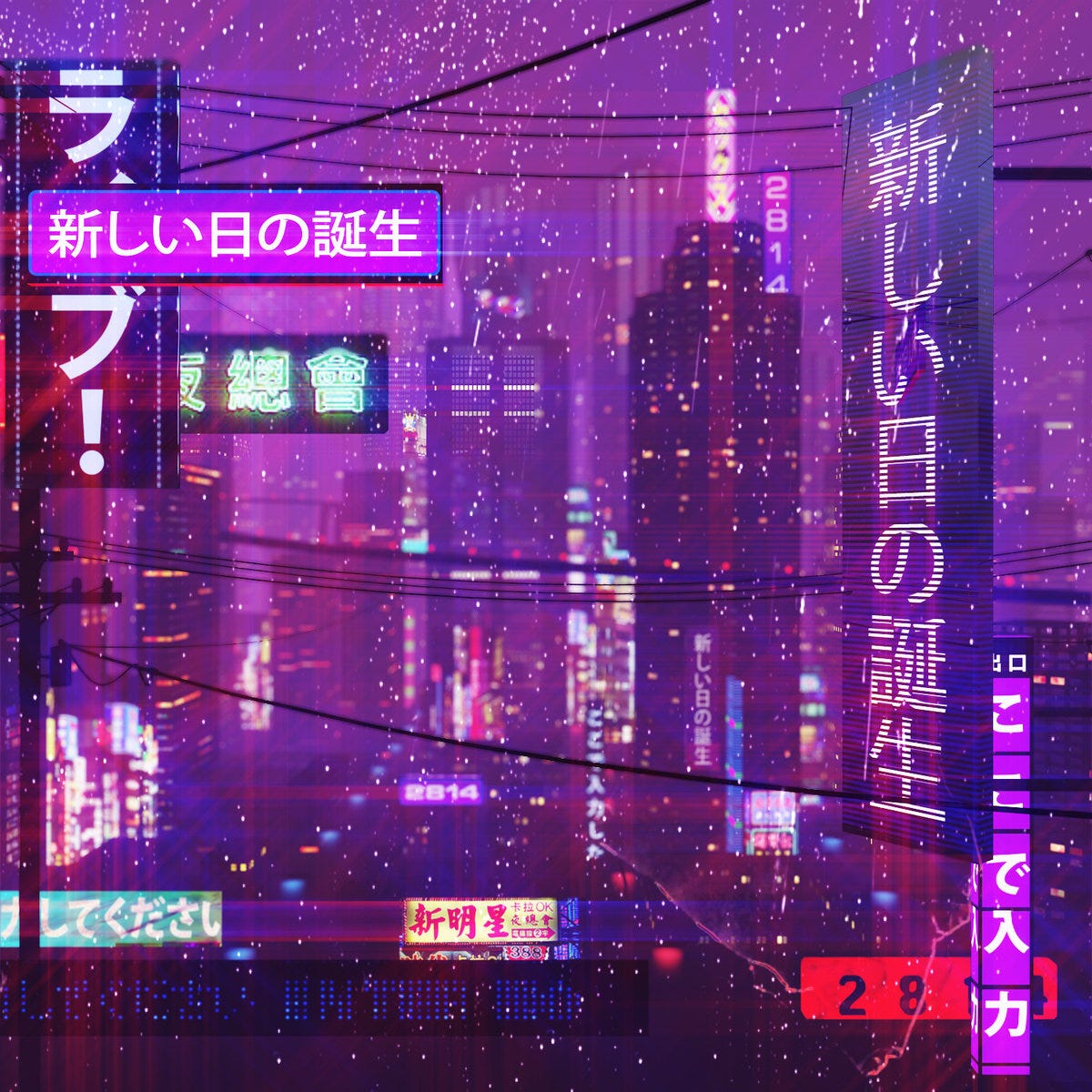
The debut album of Laurila’s duo project with Russo, 2814, came out in October. At the time, it was thought of as the first completely sample-free vaporwave project – despite earlier projects by Esprit 空想 (George Clanton) and New Zealand-based artist Eyeliner (Luke Rowell) consisting of completely original music as well.
Russo rebranded their through-composed and ambient-leaning style of vaporwave as dreampunk. Deeply influenced by the movies of Hong Kong filmmaker Wong Kar-Wai and classic cyberpunk novels and movies, he had a vision of an atmospheric form of vaporwave that wasn’t limited to just a subtle critique of consumer capitalism or whatever many people still thought the genre was about.
“There was a consensus at the time I wanted to challenge that vaporwave had to be slowed down 80s muzak”, he said in an interview at the time. “I always viewed vaporwave as a stylistic concept, rather than a music genre defined by sonic properties, and I wanted to help bring that to attention.”
In another article from late 2014, he’s quoted talking about the creative development of the music:
“It’s really impossible to predict where it will be a year or even six months from now, however, as I feel the genre changes rapidly due to the myriad influences and ideas that are brought into it all the time. But I do think it will continue to grow, either way.”
In January 2015, the second 2814 album on Dream Catalogue would change the trajectory of vaporwave again – just like Floral Shoppe a couple of years prior, it would create a whole new level of mainstream attention for the genre and land on several year-end best-of lists of respected and established music media and critics.
It would grow into a true classic of ambient and experimental electronic music that would inspire many young producers to start making music. A third, fourth and fifth generation of vaporwave would follow in Telepath’s and HKE’s footsteps, and while both artists stopped associating themselves with the scene in the second half of the 2010s, vaporwave never really went away after this release.
Looking back, it really felt like the Birth of a New Day.
Essential Listening: The Second Generation (2013-2014)
Local News – Ghost Broadcast (01/2013)
luxury elite – new classics (02/2013)
luxury elite / SAINT PEPSI – Late Night Delight (02/2013)
Disconscious – Hologram Plaza (04/2013)
Nmesh – Nu.wav Hallucinations (04/2013)
Infinity Frequencies – Computer Death (05/2013)
SAINT PEPSI – Hit Vibes (05/2013)
Lindsheaven Virtual Plaza – NTSC Memories (07/2013)
Blank Banshee – Blank Banshee 1 (10/2013)
Eyeliner – LARP of Luxury (11/2013)
Golden Living Room – NEW NOSTALGIA (03/2014)
식료품groceries – 슈퍼마켓Yes! We’re Open (03/2014)
猫 シ Corp. – HIRAETH (04/2014)
MACROSS 82-99 – A Million Miles Away (05/2014)
Esprit 空想 – virtua.zip (05/2014)
Vaperror – Mana Pool (06/2014)
t e l e p a t h テレパシー能力者 – 現実を超えて (Beyond Reality) (06/2014)
g h o s t i n g – Telenights (07/2014)
death’s dynamic shroud – VIRTUAL UTOPIA EXPERIENCE (11/2014)
MindSpring Memories – @_@ (12/2014)
2814 – 新しい日の誕生 (Birth of a New Day) (01/2015)
Fantastic!!! Very excited to know more,. By the way are you on instagram ?
damn this sounds like some major work incoming! Nice one.